The story
Tenth and eleventh centuries
Iceland, Greenland, Vinland
The first Norsewoman across the Atlantic — and the two sagas that could not agree on her
Freydís Eiríksdóttir (c. 970 – c. 1030) was the daughter of Erik the Red and the half-sister of Leif Eríksson, and one of the first Europeans documented to have crossed the Atlantic and lived on the North American mainland. She is preserved across two near-contemporary Old Norse texts that flatly contradict each other. Eiríks saga rauða (Hauksbók, Skálholtsbók, c. 13th c.) records her at the Hóp encampment in Vinland: eight months pregnant, abandoned by the Norse men under Skrælingar attack, she picks up a fallen sword beside a dead Northman, slaps the flat against her bared breast, screams, and routs the attackers. The saga calls her conduct vasklega — “valiantly.” Grœnlendinga saga (Flateyjarbók, c. 14th c.) records a different Freydís: leading her own expedition to Vinland with the Icelandic brothers Helgi and Finnbogi, she falsely accuses them of beating her, demands her husband kill them, then personally takes an axe to the five women of the rival party.
No modern reader can choose between these accounts. The album doesn’t try. Vol. VIII holds the two sagas in tension across eight tracks and lets the historiographic contradiction itself be the album’s argument. The thesis is the closing line, whispered: Both were true.
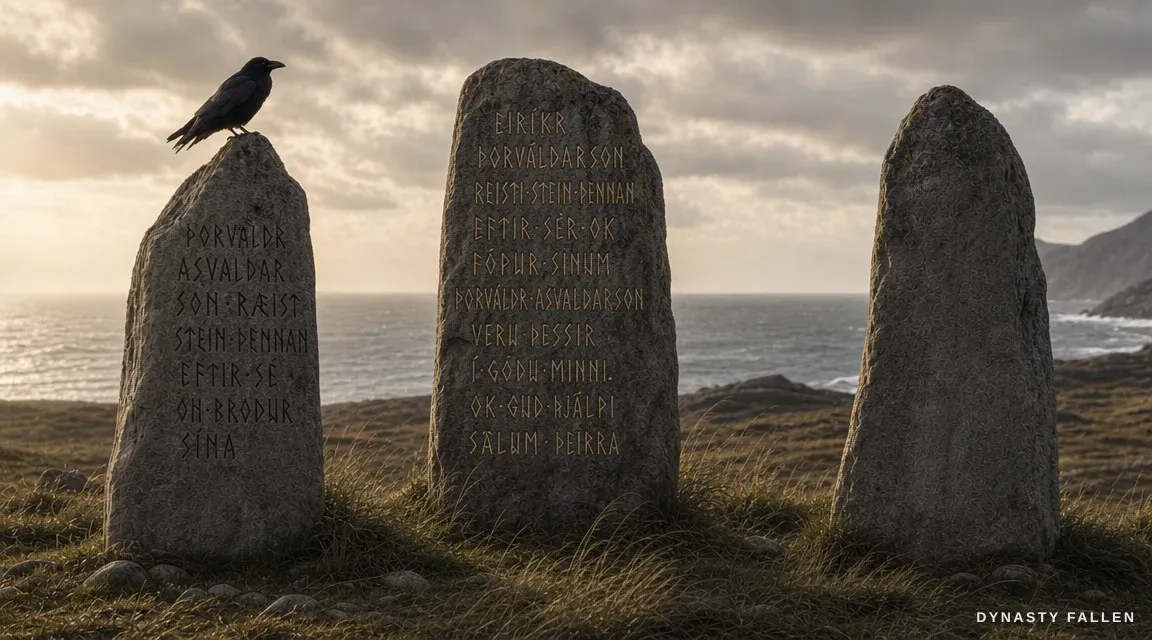
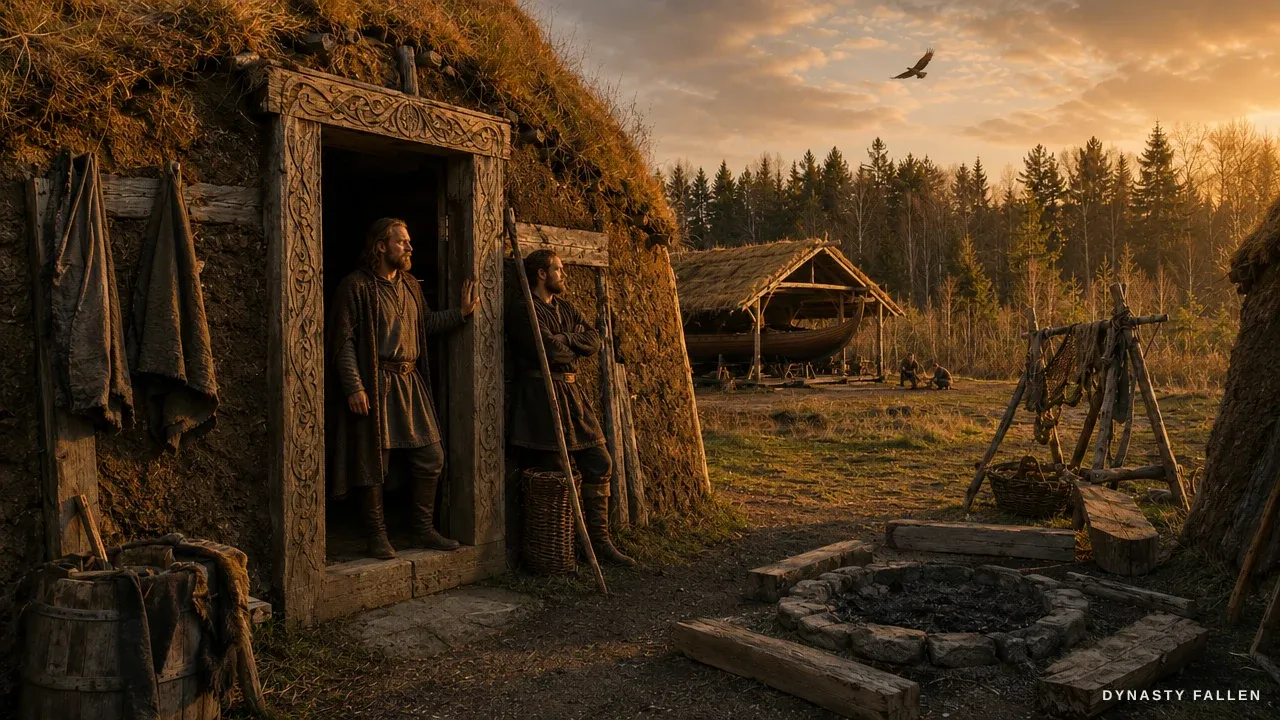
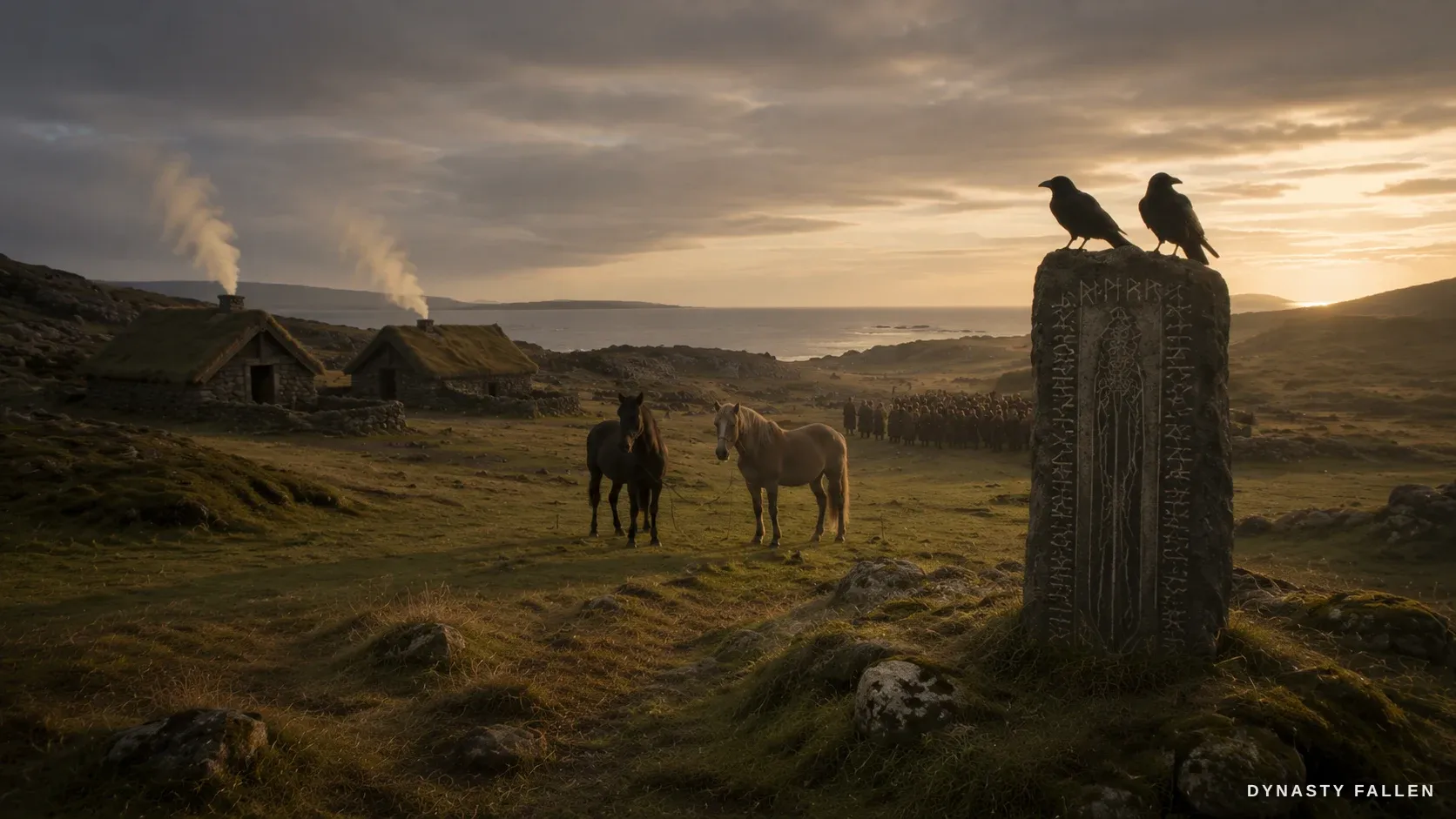
The historical frame is grounded. The album sits inside the documented archaeology of L’Anse aux Meadows, the Eastern Settlement at Brattahlíð, Landnámabók’s lineage of outlawings (Thorvald Asvaldsson from Jæren, Erik the Red twice from Iceland, Greenland colonised c. 985), and the two sagas as primary sources read together. No mythological elements, no Norse-revival sentimentality. The visual world is period-accurate to 10th- and 11th-century Norse-coastal life — turf-roofed longhouses, single-square red-and-white sail longships, hand-cut wool, the bone-handled seax-knife at her hip, the 10th-century iron sword that arrives in her hands at Vinland, the long-handled bearded war-axe of the other saga. The Indigenous peoples of the Vinland landfall — ancestors of the Beothuk and Mi’kmaq — are rendered as a coherent people with trade goods, organised camps, and strategic intelligence, not as the Norse derogatory term the lyric inherits.
Vol. VIII is the catalogue’s first album with a new vocalist. Saga — not Tanaka Rei — carries the record. There is no witness-narrator on this volume: the historical subject sings her own songs, and the music videos stay entirely inside the 10th- and 11th-century Norse-Atlantic world. The instrument that defines the sound is the Hardanger fiddle, in cold opens, bridge solos and outros across every track; the spine is Norse folk-rock with extreme dynamic contrast, gritty mezzo grounding and a soprano lift reserved for the bridge moments where the thesis lands. Eight tracks, three acts, two sagas, one woman. The chroniclers couldn’t agree. The album says they didn’t have to.
Album in active production. 8 of 8 tracks released.