Truth, Saga
& Legend
What’s documented, what’s tradition, what’s storyteller’s flourish.
An annotated history of Freydís.
The premise
Freydís Eiríksdóttir is the rare figure who survives only in story — and in two stories that flatly contradict each other. No archaeology names her, no charter records her, no annal outside the sagas knows she lived. What the ground does confirm is the world: Norse people really did cross the Atlantic and live, briefly, on the North American mainland around the year 1000. This page sorts the documented stage from the saga-only woman who walks it.
There are two principal sources, and they cannot both be right. Eiríks saga rauða (The Saga of Erik the Red), surviving in Hauksbók (c. 1302–1310), gives the heroic Freydís: pregnant and abandoned at the Hóp camp, she lifts a dead man’s sword to her bared breast, screams, and routs the attackers — the saga calls her conduct vasklega, ‘valiantly.’ Grœnlendinga saga (The Saga of the Greenlanders), surviving only in Flateyjarbók (1387–1394), gives the cold one: she engineers a quarrel with the brothers Helgi and Finnbogi, has the men killed on a false charge, and takes up an axe to the five women herself when no man will. Both were written in 13th-century Iceland, two centuries and more after the events. Neither is an eyewitness.
The popular instinct — trust the heroic saga — is, if anything, backwards. Scholars more often grant the historical edge to Grœnlendinga saga, while reading Eiríks saga as the more polished, more consciously literary, more theologically shaped of the two. The contradiction is not a puzzle with a hidden solution. It is the record itself.
Around the woman stands a documented frame. The Norse site at L’Anse aux Meadows in Newfoundland — found by Helge and Anne Stine Ingstad in 1960, and dated by a 2021 Nature tree-ring study to AD 1021 — proves the Vinland voyages were real. Landnámabók corroborates the lineage of exiles behind her: Thorvald Asvaldsson banished from Norway, Erik the Red outlawed from Iceland, Greenland colonised c. 985. The world is documented. The woman is saga.
Verdicts below: Documented · From the sources · Legend & flourish.
Documented
What multiple independent sources agree on.Norse people reached and briefly lived on the North American mainland around AD 1000.
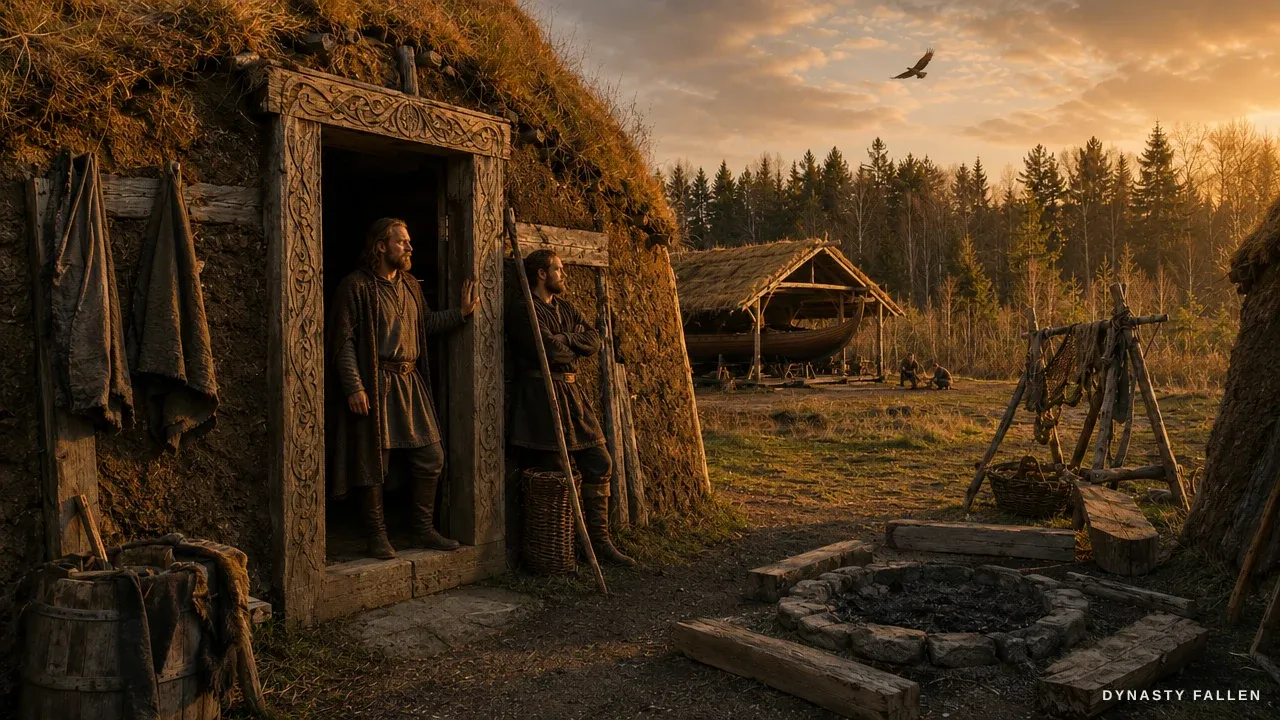
This is the one thing about the Vinland story that is archaeologically certain. The Norse site at L’Anse aux Meadows, on the northern tip of Newfoundland, was discovered in 1960 by the Norwegian explorer Helge Ingstad and excavated from 1961 to 1968 under the direction of his wife, the archaeologist Anne Stine Ingstad. The dig revealed eight sod-walled buildings, a forge, cooking pits, and boat-sheds in unmistakably Norse construction.
It is a UNESCO World Heritage Site and a National Historic Site of Canada, and it remains the only confirmed Norse site in North America outside Greenland. The album’s entire physical world — turf longhouses, boat-sheds, drying racks, the crossing itself — is grounded here. What the site cannot do is name anyone: it confirms the stage, not the cast.
Norse activity in the Americas is precisely dated to AD 1021.
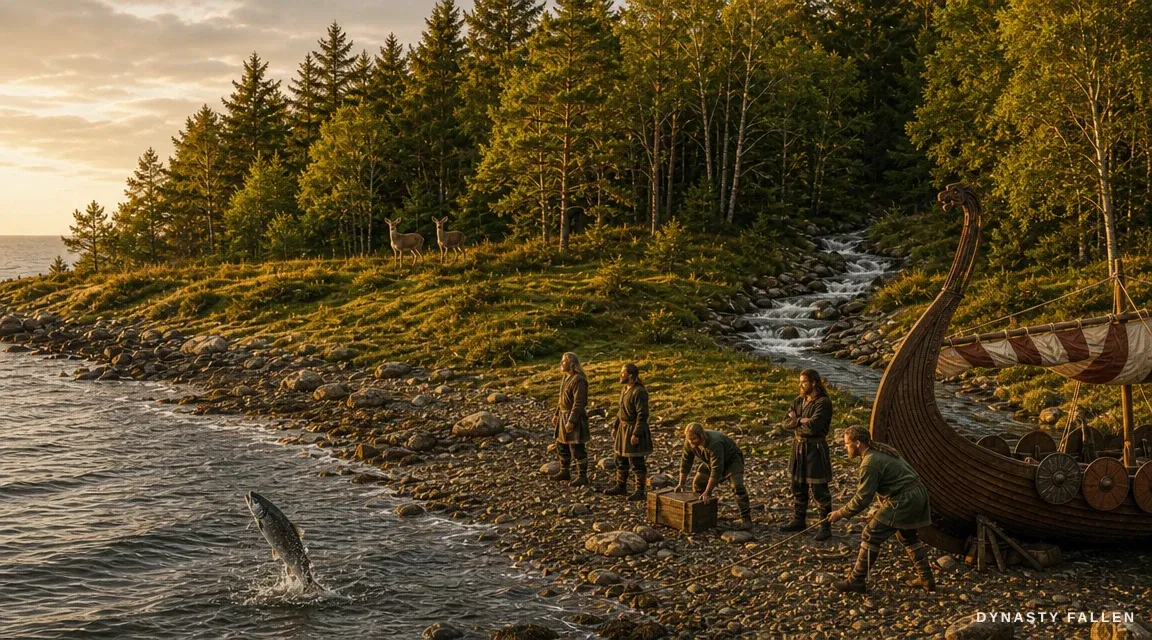
In 2021, Margot Kuitems, Michael Dee and colleagues published “Evidence for European presence in the Americas in AD 1021” in Nature. They exploited the 993 CE “Miyake event” — a cosmic-ray spike that left a global radiocarbon marker in tree rings worldwide — and counted rings outward to the bark on three separate pieces of Norse-cut wood from L’Anse aux Meadows. All three trees were felled in 1021 CE.
That is the first secure calendar date for any European presence in the Americas before Columbus. It dates the site, not Freydís — it cannot confirm any individual saga episode — but it nails the chronological window the sagas describe, and ends any lingering doubt that the Vinland voyages happened at all.
The lineage was three generations of outlaws — Thorvald Asvaldsson to Erik the Red to the colonisation of Greenland c. 985.
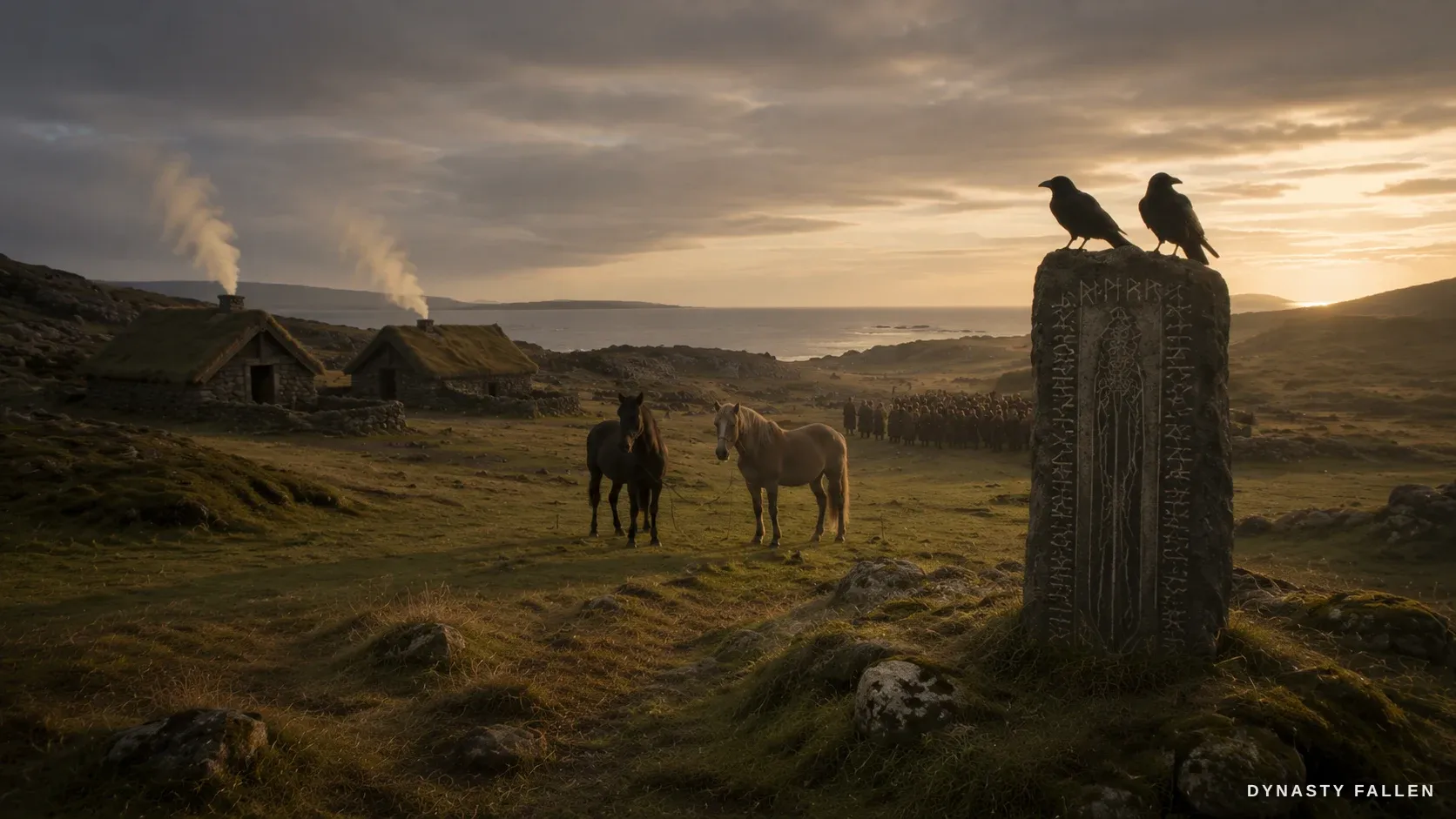
The album’s opening architecture, and the spine of it is corroborated across Landnámabók and both sagas. Thorvald Asvaldsson was exiled from the Jæren district of Norway for manslaughter and took his son Erik west to Iceland. Erik — nicknamed “the Red” for his hair — was himself later outlawed from Iceland for killings, sailed west, and led the colonisation of Greenland around 985. The genealogy and the pattern of banishment are consistent across the sources.
One caveat the album makes deliberately: Freydís herself is never recorded as an outlaw. Framing her as the “third generation of outlaws” is the album’s interpretive gloss on a documented chain of exiles — a thematic claim, not a legal one.
“Skrælingar” is the Norse exonym for the Indigenous peoples they met — and it is derogatory.
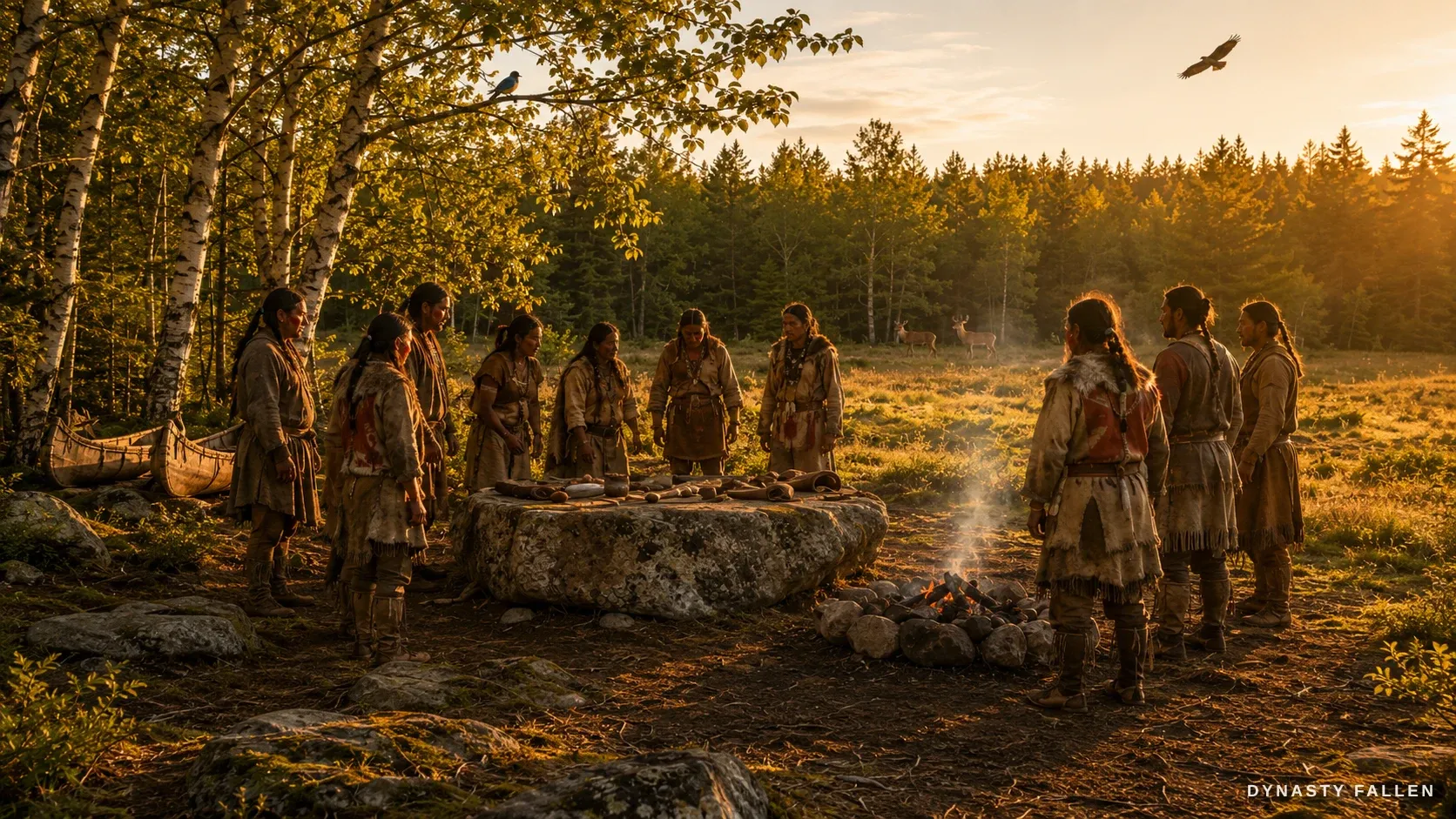
Skræling (Old Norse skrælingi, plural skrælingjar) is the term the Norse Greenlanders used for the Indigenous peoples of the western lands — encompassing, by region and period, the Dorset culture, the Thule (ancestors of the Inuit), and Algonquian-speaking peoples such as the Beothuk. The etymology is uncertain but the derogatory weight is well attested: candidate roots include skrá (“dried skin,” for pelt clothing), skrælna (“to shrivel,” implying small stature), and skrækja (“to bawl”).
In modern Icelandic skrælingi means “barbarian”; the Danish descendant skrälling means “weakling.” The album uses the word because it is the historical record — while rendering the people themselves as a coherent society with trade goods, organised camps, and strategy, explicitly refusing the Norse framing the term carries.
From the sagas
Saga-only. Plausible, vivid, and unverifiable.Freydís was the daughter of Erik the Red and kin to Leif Eríksson.
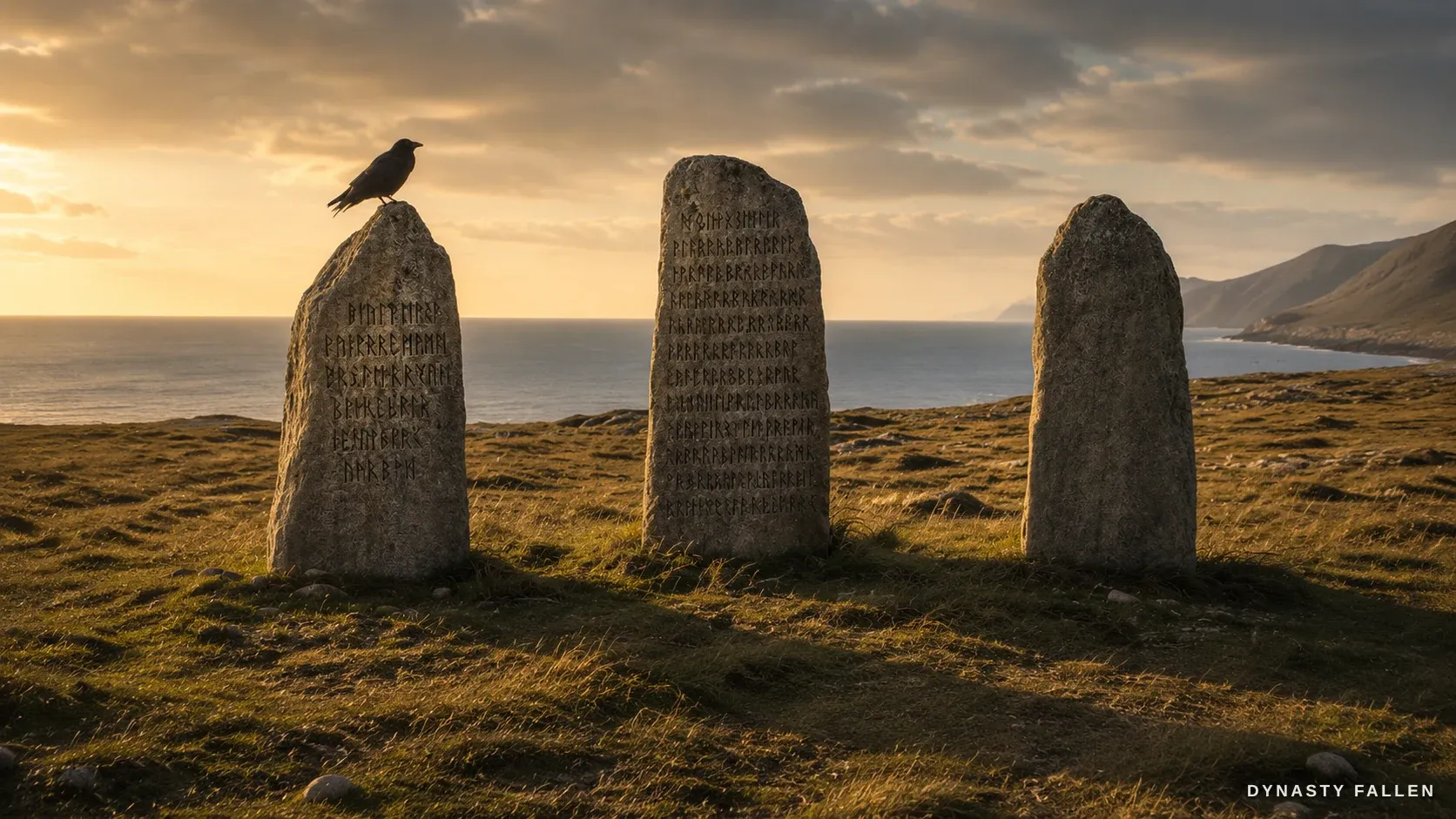
Attested in both Vinland sagas — but the two sources disagree on the exact relationship, and the disagreement is itself the album’s subject. Eiríks saga rauða makes Freydís a half-sister of Leif, implying illegitimacy: her mother is never named, which is the usual scholarly basis for inferring she was an illegitimate daughter. Grœnlendinga saga makes her a full sister.
There is no independent record of her parentage outside these two texts. So even her family position — the bedrock identity behind Track 01’s “I am Erik’s daughter” hook — is saga-level, and contradicted between the sagas. The album builds the hook precisely because the claim is contested, not despite it.
Freydís existed at all as a historical person.
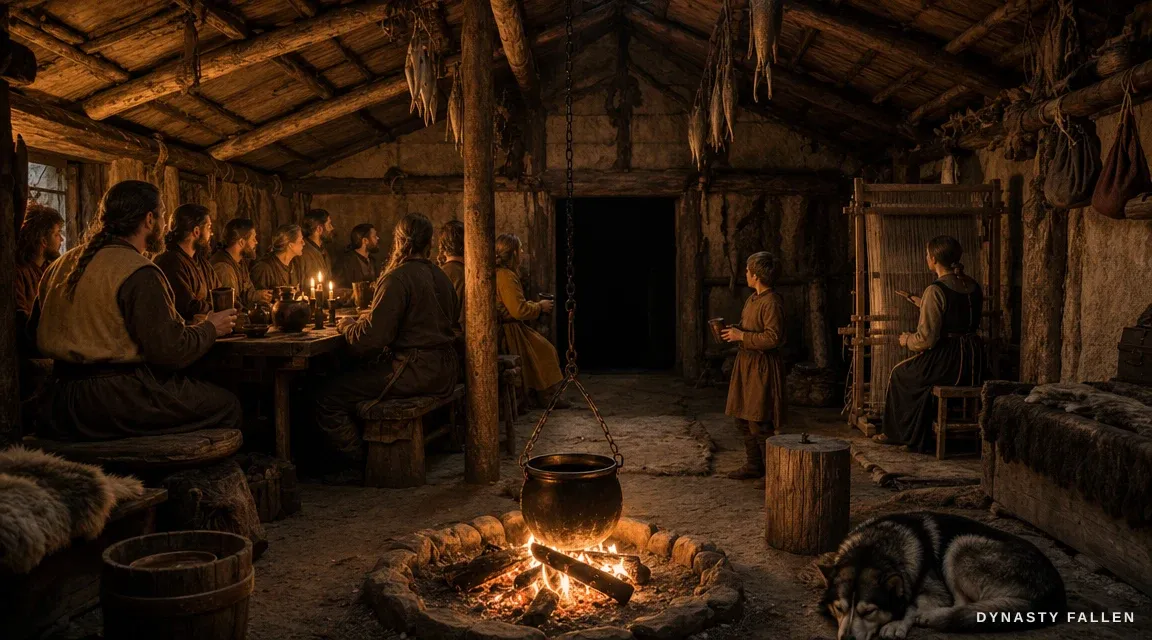
This is the single most important entry in the audit. Freydís is not independently attested anywhere: not in archaeology, not in any charter, annal, or external chronicle. She survives only in Eiríks saga rauða and Grœnlendinga saga, both written down in 13th-century Iceland, two centuries and more after the events.
L’Anse aux Meadows confirms the Vinland voyages as real but names no one and confirms no individual episode. Everything specific to Freydís therefore rests on saga testimony alone — which is why the bulk of this page lands on the saga verdict, and why the album’s honest move is to treat her as a figure of the saga tradition rather than a documented biography. The world is documented; the woman is saga.
At Hóp, pregnant and abandoned, Freydís lifted a fallen sword to her bared breast, screamed, and routed the attackers.
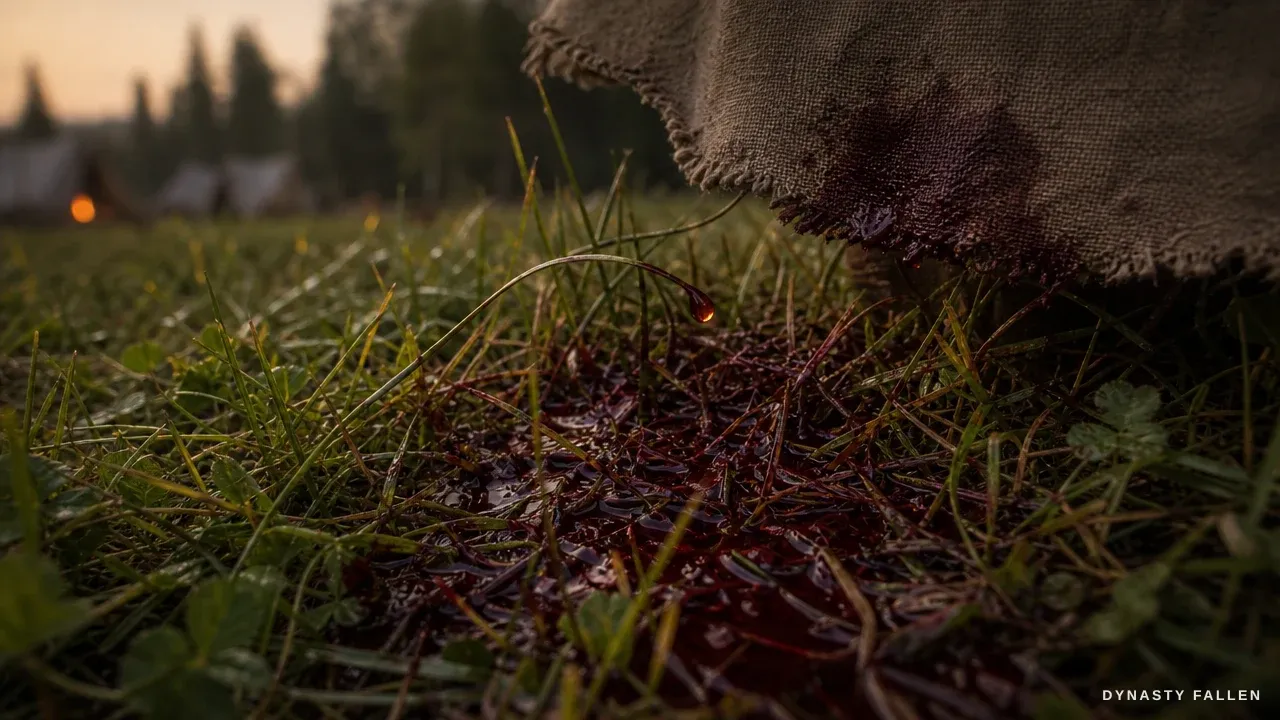
This is the album’s centrepiece (Track 05), and it is genuinely in the source. Eiríks saga rauða records it at the Hóp encampment: Freydís heavily pregnant, the Norse men in flight, a slain Northman (Thorbrandr Snorrason) beside the fallen sword. She takes up the blade, bares her breast and strikes it with the flat, and screams — and the attackers flee. The saga calls her conduct vasklega, “valiantly.”
Crucially, the album is not embellishing the scene; it renders what the saga says. But it is single-source: the episode appears only in Eiríks saga rauða, has no parallel in Grœnlendinga saga, and cannot be corroborated. It is a powerful piece of saga literature — not a documented event.
Freydís led her own expedition with Helgi and Finnbogi, falsely accused them, had the men killed, and axed the five women herself.
The album’s Act III (Track 07) — the other, darker Freydís — comes entirely from Grœnlendinga saga. She proposes a joint Vinland voyage with the Icelandic brothers Helgi and Finnbogi on a 50/50 split, engineers a quarrel, falsely tells her husband Thorvard that the brothers assaulted her, and has the men killed. When no man will strike the women, she takes up an axe and kills the five women of the rival party herself.
Like the bareblade, it is single-source, with no parallel in Eiríks saga rauða, and uncorroborated. It is the saga tradition’s second, irreconcilable portrait of the same woman — and the album stages it without softening, because refusing to choose between the two is the whole point.
The two sagas are near-contemporary and flatly contradict each other; neither can be privileged as the truth.
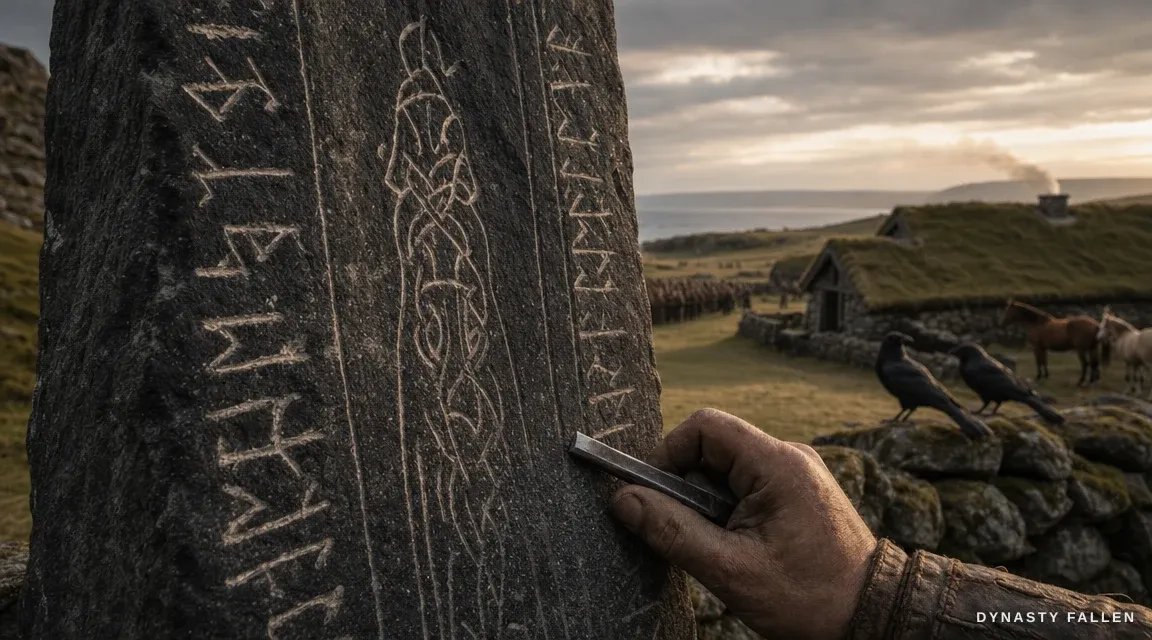
Both sagas were composed in 13th-century Iceland and survive in later manuscripts: Eiríks saga rauða in Hauksbók (c. 1302–1310) and the near-identical Skálholtsbók; Grœnlendinga saga in Flateyjarbók (compiled 1387–1394). They narrate overlapping events with different structures — Eiríks saga compresses the voyages into roughly three expeditions, Grœnlendinga saga spreads them across about six — and they give two incompatible Freydíses.
Both were written 200+ years after the events; neither is an eyewitness record. No external evidence can adjudicate between them. The album’s thesis — both were true — is the only intellectually honest stance, because the contradiction is not a puzzle with a hidden solution. It is the record itself.
The heroic saga is the trustworthy one.
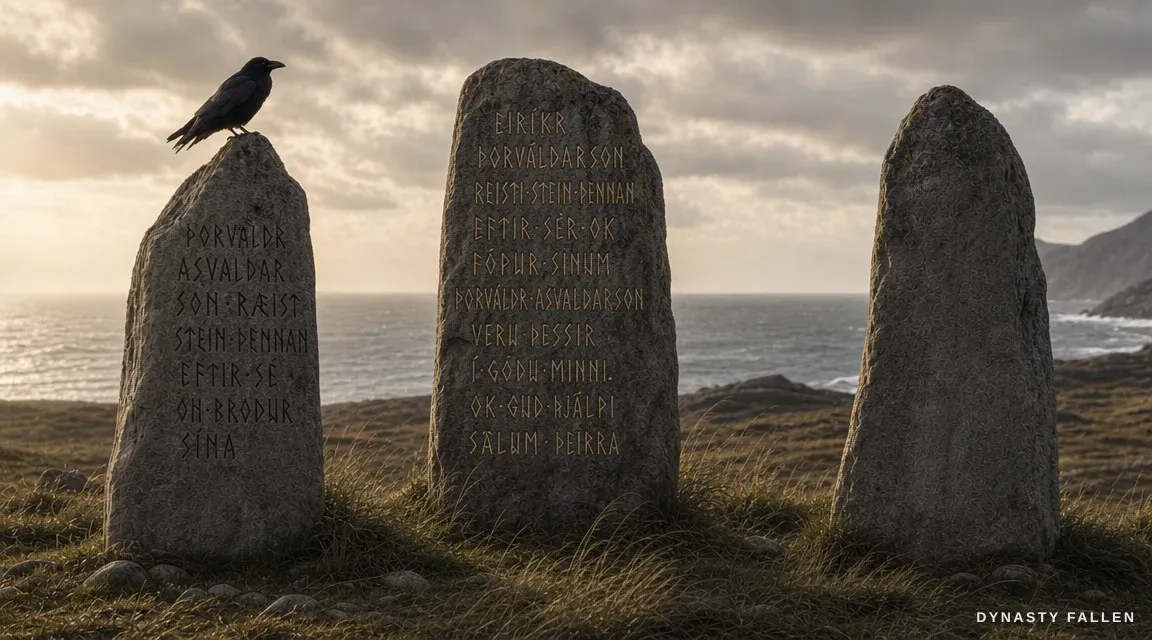
An important correction to a frequent assumption — including in the album’s own working materials. The popular intuition that the “heroic” Eiríks saga is the trustworthy one is the reverse of the scholarly tendency. Many scholars grant Grœnlendinga saga the edge in historical credibility on certain points, while reading Eiríks saga rauða as the more consciously literary, reworked, and theologically shaped of the two — it foregrounds Christian-providential framing and Þorfinnr Karlsefni’s line.
The debate over which saga is older and more reliable is long-running and unresolved. The album does not need to resolve it; but it’s worth recording that the instinct to believe the bareblade because it’s the stirring story is a misreading of the source-critical consensus. Neither portrait gets to be the fact.
The Skrælingar of the Vinland landfall were ancestors of the Beothuk and Mi'kmaq.
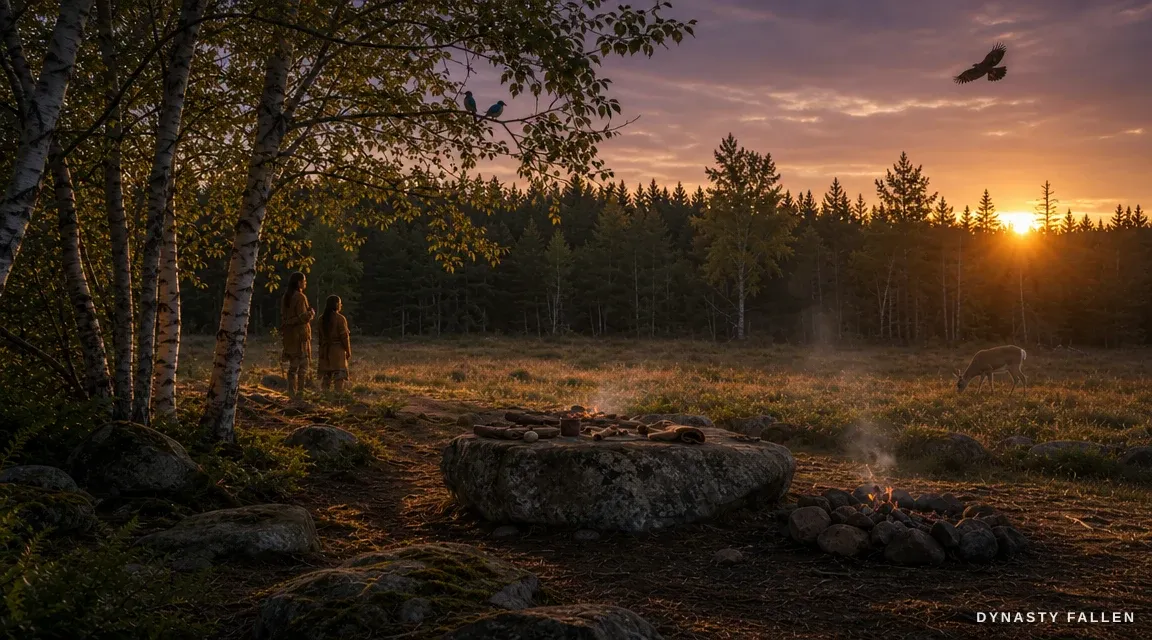
The album renders the Vinland Skrælingar specifically as ancestors of the Beothuk and/or Mi’kmaq of Newfoundland and the Maritimes. This is a reasonable inference from geography and from the term’s documented use — but it is not confirmed. Skrælingjar was a broad Norse cover-term spanning the Dorset culture, the Thule, and Algonquian-speaking peoples, and the sagas give no ethnographic detail precise enough to fix a single nation.
The careful, period-accurate rendering — red ochre, caribou and sealskin garments, birchbark canoes, organised winter shelters — is a responsible reconstruction. But the specific Beothuk/Mi’kmaq identification is interpretive, not documented, and the page flags it as such.
Hóp and Straumfjörð are real, locatable Vinland places.
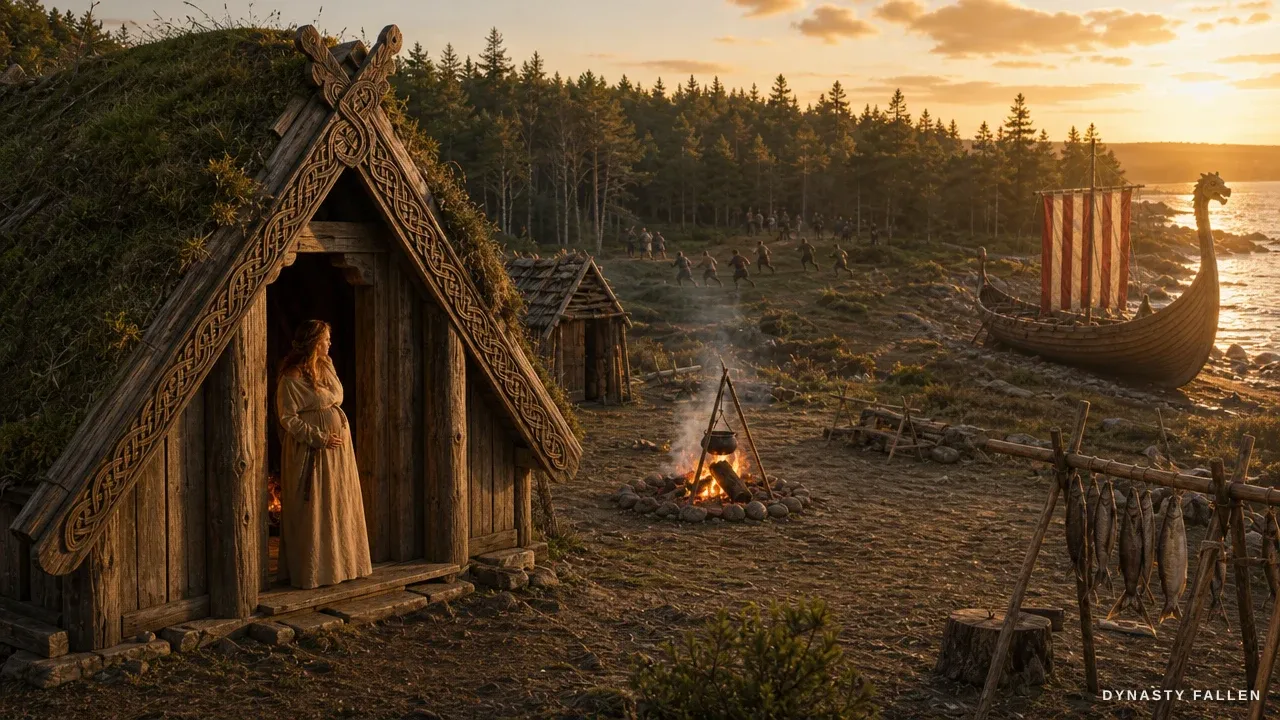
The saga camp-names — Hóp (the site of the bareblade), Straumfjörð, Leifsbúðir — are saga geography. None has been securely identified archaeologically. L’Anse aux Meadows is the only confirmed Norse site, and it cannot be equated with certainty to any single named saga camp; it likely served as a base from which points further south were explored.
The album treats Hóp and Straumfjörð as saga place-names rather than mapped locations — which is correct. The grain, the wild vines, and the warmer southern coast the sagas describe sit somewhere beyond the confirmed dig, in a geography the texts assert and the spade has not yet found.
Freydís's brother Thorvald Eríksson was killed by a Skrælingar arrow.
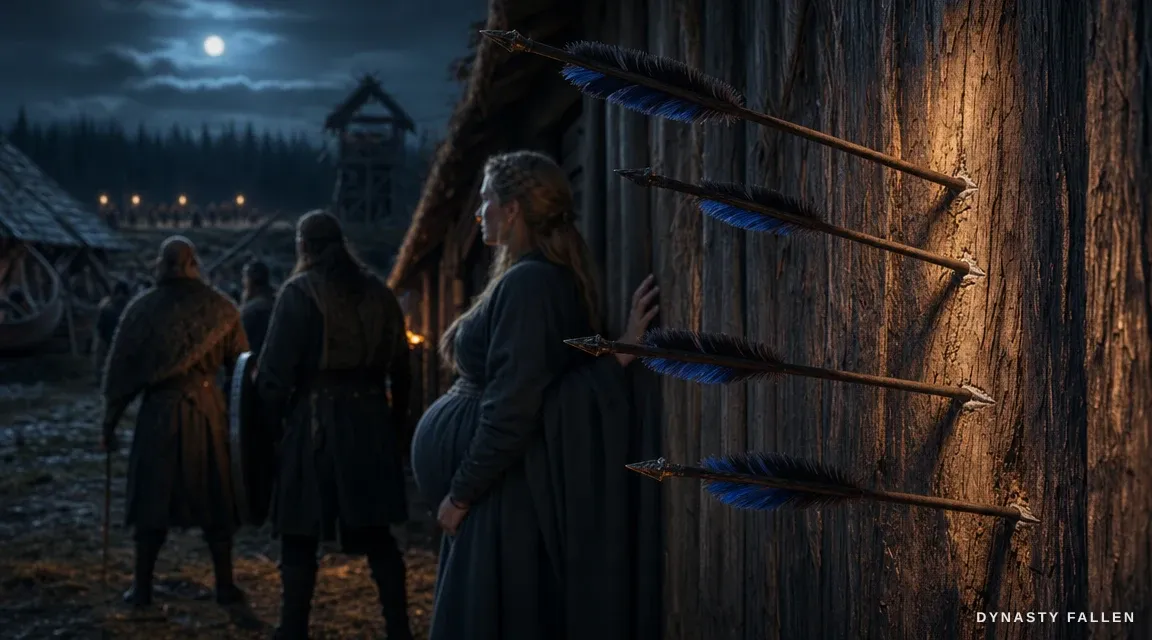
The death of Freydís’s brother Thorvald Eríksson by an arrow during a coastal encounter is recounted in the saga tradition, a vivid and oft-cited episode. The album uses it as a Track 03 cutaway — the first Norse blood spilled on the western shore, and a foreshadowing of the violence the family carries west with them.
But it is saga testimony: single-tradition, written down centuries after the fact, and uncorroborated by any independent source. Like nearly everything specific in the Vinland narratives, it is a story the sagas tell, not an event the record confirms.
Legend & flourish
Where the saga becomes literature.Vikings wore horned helmets.
A 19th-century invention, popularised by Romantic-nationalist art and by Carl Emil Doepler’s costumes for Wagner’s Ring cycle in 1876. No Viking-age helmet with horns has ever been excavated. Period helmets were plain iron caps — the Gjermundbu helmet is the one near-complete surviving example.
The album excludes horned helmets entirely; the claim is recorded here only to flag what the production deliberately refuses. Every helmet in the Freydís world is a plain iron or leather cap, because that is what the archaeology shows.
Freydís was a trained warrior “shieldmaiden” in the modern pop-culture sense.
Modern media — most prominently the Vikings and Vikings: Valhalla franchises — recast Freydís as a trained warrior “shieldmaiden,” a romanticised archetype shaped heavily by 21st-century pop culture and Norse-revival aesthetics. The sagas support no such thing. Eiríks saga gives her exactly one act of violence under extremity (the bareblade, while pregnant and abandoned); Grœnlendinga saga gives her a cold political murder. Neither portrays a trained fighter.
The album is careful here: it stages the single saga act, not the franchise archetype. The distinction matters — the saga Freydís is frightening because the violence is unexpected and situational, not because she is a warrior by trade. The page marks the line between what the saga says and what pop culture added.
The Vinland Map authenticates the Norse discovery of America.
The so-called Vinland Map, once promoted as a 15th-century map showing Norse Vinland, has been comprehensively discredited as a forgery. Yale University, which holds it, has formally declared it fake; the ink contains 20th-century anatase titanium dioxide. It proves nothing and is not evidence for anything in this album.
The genuine evidence for the Norse in America is archaeological — L’Anse aux Meadows — not cartographic. The map is listed here only because it routinely contaminates popular accounts of Vinland, and the album’s documented frame rests on the dig, never on the forgery.
A note on stance
Why the album holds the position it does
Vol. VIII does not pick the hero over the murderer or the murderer over the hero. It does not reconcile the half-sister of one saga with the full sister of the other. It does not pretend the archaeology can vouch for a person it cannot name.
If you want the documented record, you get a real century, a real crossing, a real people the Norse called Skrælingar — and silence where the woman should be. If you want Freydís herself, you get two irreconcilable saga portraits and no third source to break the tie. The honest move is to hold both at once.
Vol. VIII is for the Norsewoman the sagas could not agree on. This page is so you can hold both pages open — the thesis the album whispers in its closing line: Both were true.
Sources & further reading
What the album draws from, and modern scholarship for digging deeper.Primary sources
- Eiríks saga rauða (The Saga of Erik the Red)
The more consciously literary and reworked of the two Vinland sagas, with a pronounced Christian-providential frame and an emphasis on Þorfinnr Karlsefni's line. Source for the heroic Freydís — the Hóp bareblade, her conduct named vasklega. Single-source for that episode, written 200+ years after the events; no eyewitness authority.
- Grœnlendinga saga (The Saga of the Greenlanders)
Source for the villainous Freydís — the murder of Helgi and Finnbogi and the axe-killing of the five women. Often judged the more historically reliable of the two on certain points despite its later surviving manuscript. Single-source for that episode and uncorroborated; the second, irreconcilable portrait of the same woman.
- Landnámabók (The Book of Settlements)
The genealogical frame behind the album's opening: Thorvald Asvaldsson's exile from Jæren for manslaughter, the family's move to Iceland, and Erik the Red's outlawries and colonisation of Greenland c. 985. Corroborative for the broad chain of exiles, but compiled long after the events and partly drawing on the same saga tradition.
Modern scholarship
- The Vinland Sagas: The Norse Discovery of America
The standard mid-century English translation of both sagas, with a substantial introduction on the archaeological evidence and the sagas' development. The accessible starting point for reading the two Freydíses side by side.
- The Vinland Sagas
The current scholarly-standard accessible English text; Kunz's translations first appeared in The Complete Sagas of Icelanders (1997). Sigurðsson's introduction applies oral-tradition source-criticism to the question of Vinland's reliability and location.
- The Medieval Icelandic Saga and Oral Tradition
Foundational treatment of the sagas' relationship to oral tradition — essential context for why the Vinland sagas preserve two incompatible portraits of the same woman and why neither can be privileged as fact.
- Viking Age Iceland
The standard scholarly account of the social and legal world — outlawry, the Þing, settlement — that frames the lineage-of-exiles material behind Track 01.
- Evidence for European presence in the Americas in AD 1021
The tree-ring/Miyake-event study that dated Norse-cut wood at L'Anse aux Meadows to exactly AD 1021 — the first secure calendar date for any European presence in the Americas before Columbus. Dates the site, not Freydís, but nails the chronological window the sagas describe.
Read online
- Eiríks saga rauða
Free full text of the Saga of Erik the Red, the source for the heroic Freydís and the Hóp bareblade.
sagadb.org → - Grœnlendinga saga
Free full text of the Saga of the Greenlanders, the source for the axe-Freydís and the killings at the Eastern Settlement.
sagadb.org → - Norse activity at L'Anse aux Meadows dated to 1021
The 2021 paper establishing the AD 1021 date for the only confirmed Norse site in North America.
nature.com → - L'Anse aux Meadows National Historic Site
The site itself — eight sod-walled Norse buildings, a forge, and boat-sheds — and the archaeological case for the Vinland voyages.
whc.unesco.org →
Citations on individual claims above point to specific chapters and editions. The list here is the broader context — what to read next if you want to follow the queen out of the song and into the historical record.