The story
c. 1020 – c. 1070
Bosham, Winchester, Hastings and Exeter
The house of Godwin, from its rise to 1066 and the exile
Gytha was a Danish girl married into England around 1020 — the sister of Jarl Ulf, who had married King Cnut’s own sister, given to Cnut’s rising English earl, Godwin. She built the greatest house in the kingdom. One of her daughters became Edward the Confessor’s queen; four of her sons became earls; one became king. And between 1051 and 1068 she lost all of them: the youngest to a hostage-taking, the eldest on the road from Jerusalem, one to his own brother’s army, and three in a single October afternoon at Hastings.
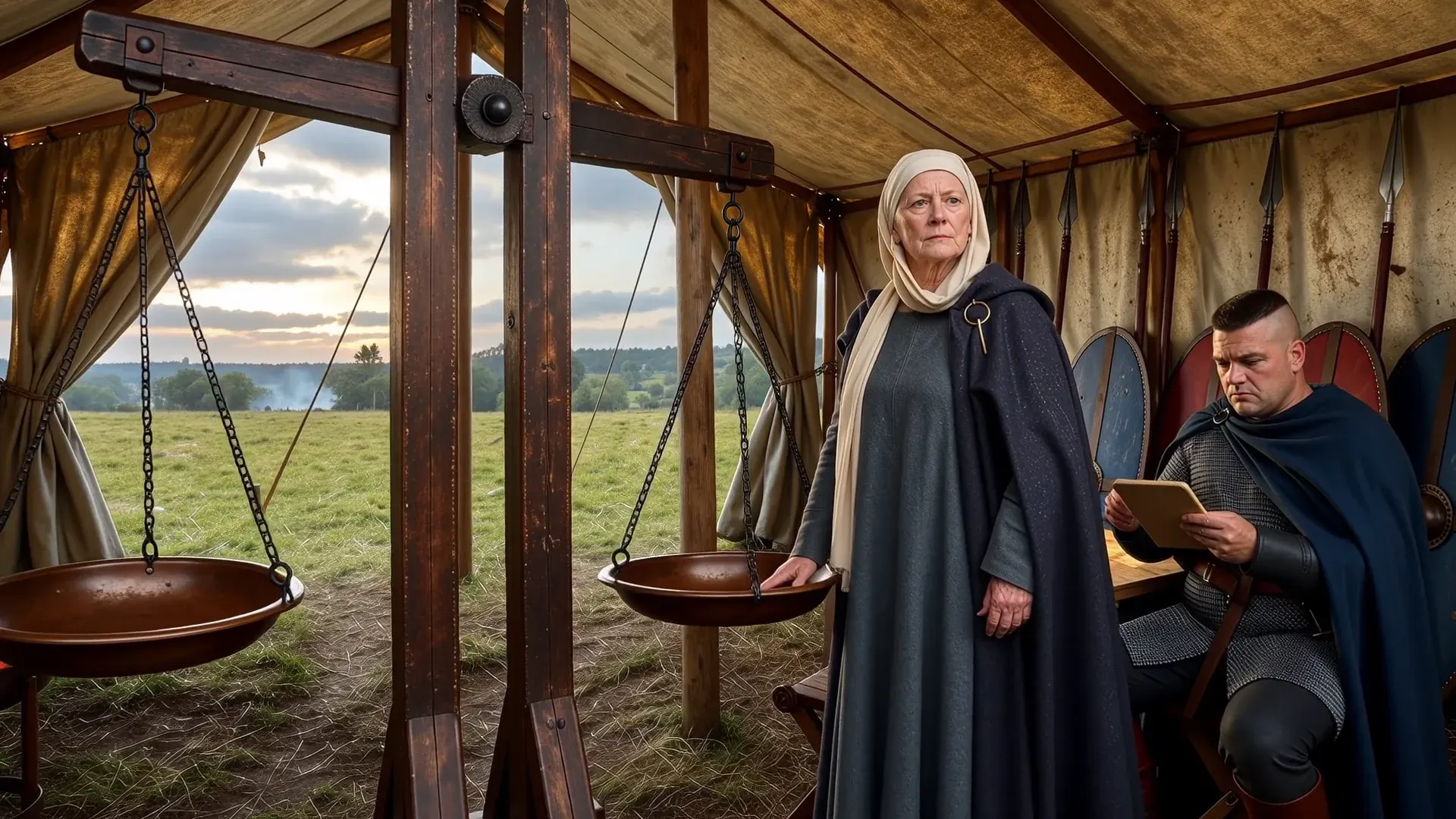
Then the record gives her three moments. She offers the Conqueror her son’s weight in gold for his body, and he will not take it. She is inside Exeter when the city shuts its gates against him for eighteen days. And she leaves by water, out to a bare island in the Bristol Channel “with the wives of many good men,” and over the sea to Flanders. Her death is not written down anywhere.
Vol. XIX runs in three acts. The House is c. 1020 to 1053: the Danish bride, the boy handed to the king, the husband who fell at the Easter table. The Autumn of 1066 is one year: a crown in January, a brother killed by a brother in September, the field and the gold in October. The West is 1068 and after: the gates of Exeter, the boat, and the candles.
“Six sons, and England kept them all.”
This is the sequel to Emma of Normandy. Emma was the woman who survived by writing her own record. Gytha is the one nobody wrote down — almost everything about her year was set down by the men who won it. The album sings what the record says and marks what it only claims, and the Truth & Legend page is where you can check which is which.
Album in active production. 2 of 11 tracks released. The remaining 9 drop through the rest of the cycle.