The story
Mid-tenth century
Norway, Northumbria, and the Danish bog
The witch the chroniclers named sorceress because they could not name her queen
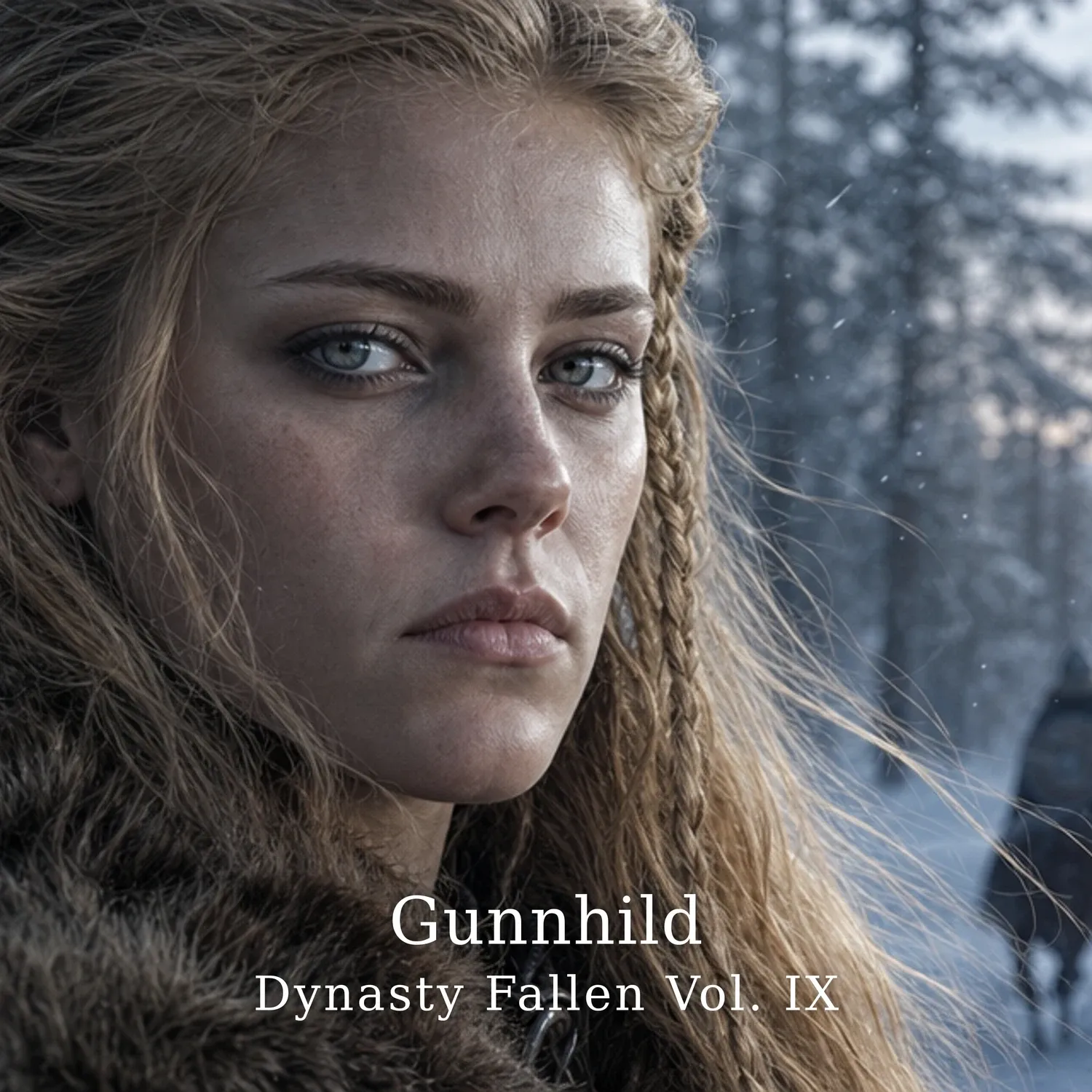
Gunnhildr konungamóðir — Gunnhild Mother of Kings — was a Scandinavian queen at the middle of the tenth century, the most vivid female figure in the Norse saga canon and the woman who ruled Norway, in fact, through her son Harald Greycloak for nearly a decade. Wife to Erik Bloodaxe, exile-queen of Viking Northumbria at Jórvík, mother of the Eríkssynir — the brothers who returned home and seized the throne after their father’s death — and the chroniclers’ consistent answer to the question how did this woman rule a kingdom without ever sitting on it?. The answer the medieval sources give, in unison, is seiðr — sorcery, curse-magic, killing at distance. The album takes the chroniclers at their word.
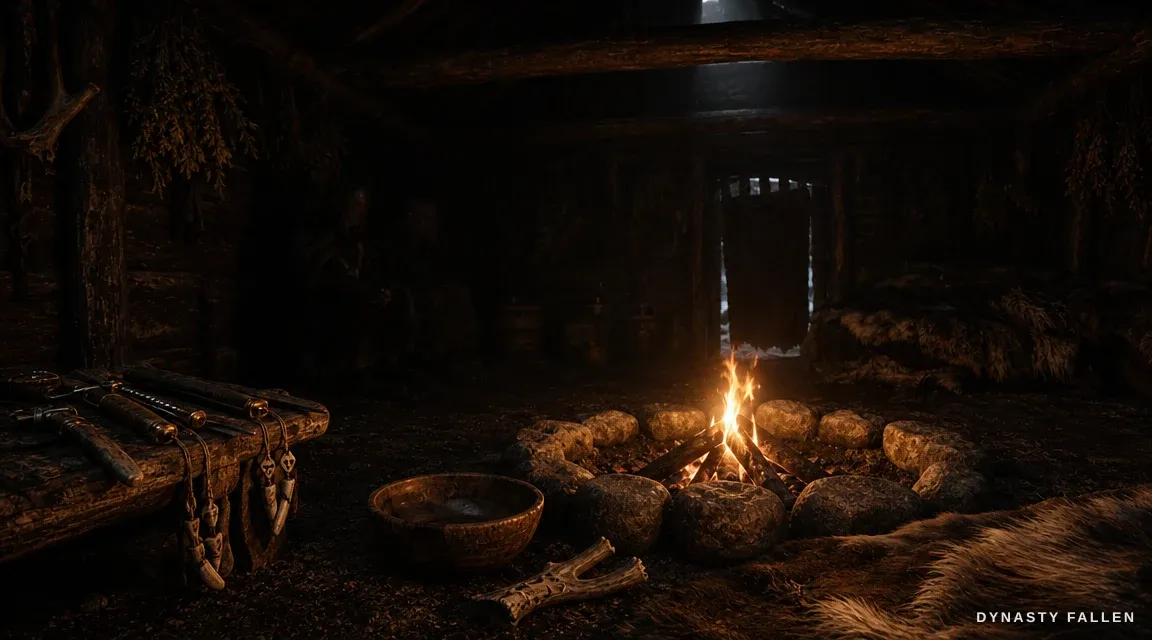
She enters the saga as a young woman alone in a Sámi-frontier hut with two wizards who have been teaching her seiðr in exchange for her bed. She asks Erik’s raiding party to kill the wizards in their sleep. They do. She rides south with them and becomes Erik’s queen. Heimskringla records this as fact. Historia Norwegiae records, instead, a political marriage between Gorm the Old’s daughter and a Norwegian king — Vol. IX is for the Heimskringla queen, and the Truth & Legend page is here so you can hold both at once.
“I named the arrow. I named the man.”
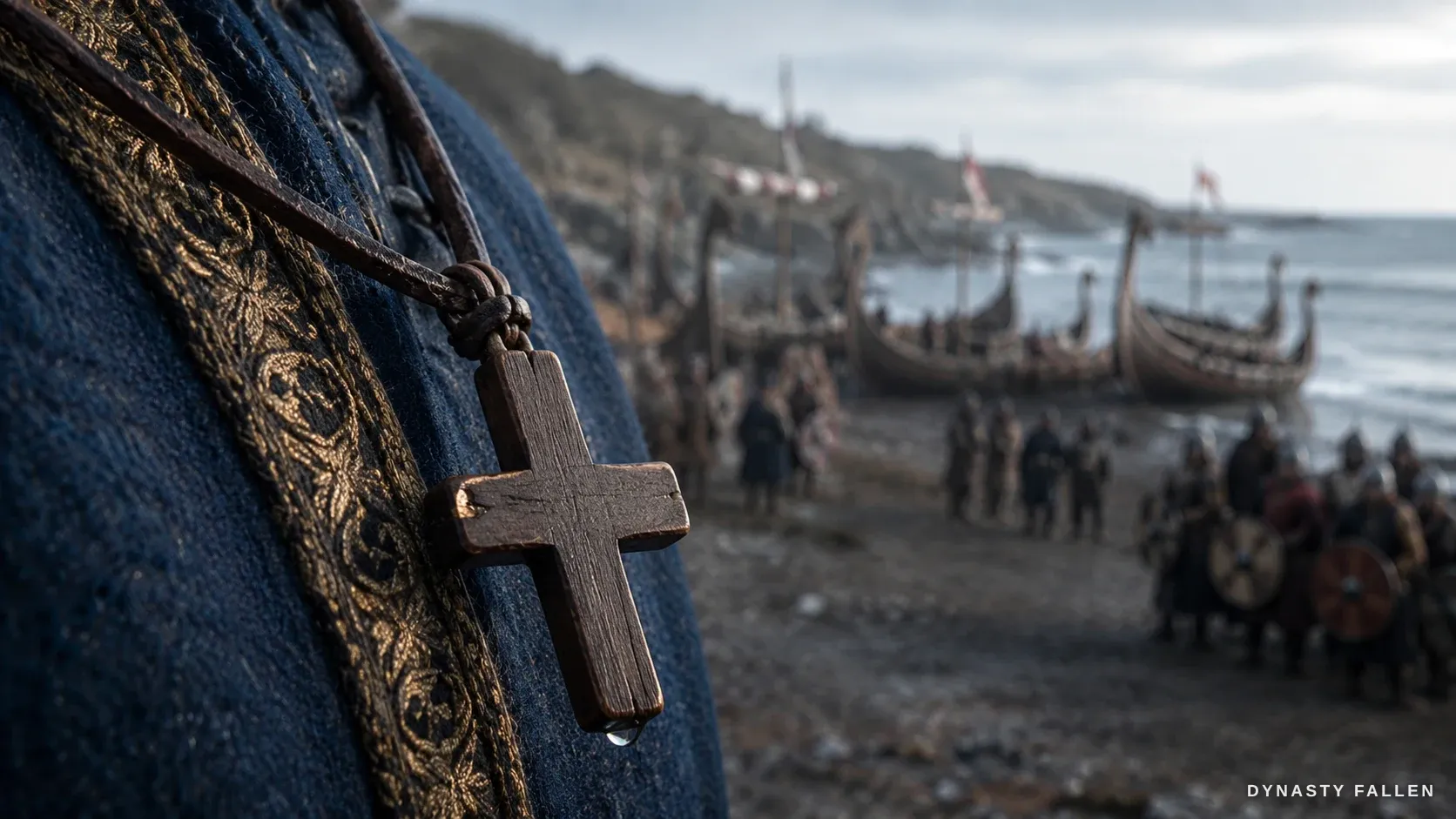
After Erik was driven from Norway by his half-brother Haakon the Good, the family took the throne of Northumbria at Jórvík — twice — until Erik was ambushed at Stainmore in 954 and his closest sons died beside him. Gunnhild and the surviving Eríkssynir retreated to Orkney, then to Denmark, where Harald Bluetooth sheltered them through the wars of return. The decisive battle was Fitjar, c. 961, on the island of Stord. Haakon won the field but took a valbǫst — a named arrow, both literally rare and implicitly seiðr-guided — under the arm, bled out on the ride home, and died at Hákonarhella. Harald Greycloak became king of Norway. Gunnhild ruled through him, and the chroniclers spent the rest of the century telling each other how she did it.
She lost the war of attrition slowly, across the 960s and 970s, as Hákon Sigurðsson Jarl picked off the Eríkssynir one by one. Harald Greycloak was lured to Denmark by Harald Bluetooth and the Jarl together and killed there. With her sons dead, Gunnhild was alone. The death-tradition preserved in Jómsvíkinga saga and later Danish folk legend has Harald Bluetooth send for her with a fake marriage offer; she rode south to Denmark and was drowned in a peat bog at Haraldskær. A nineteenth-century bog body was identified as her for half a century before carbon-dating placed it five hundred years earlier — but the legend was already, by then, half of what people knew about her.
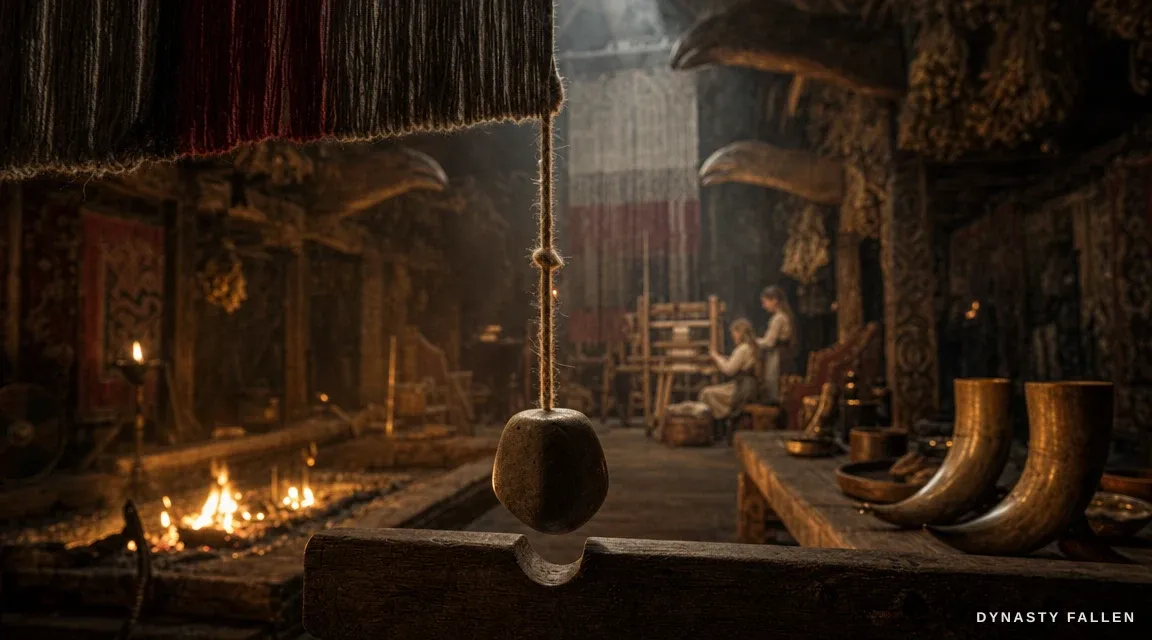
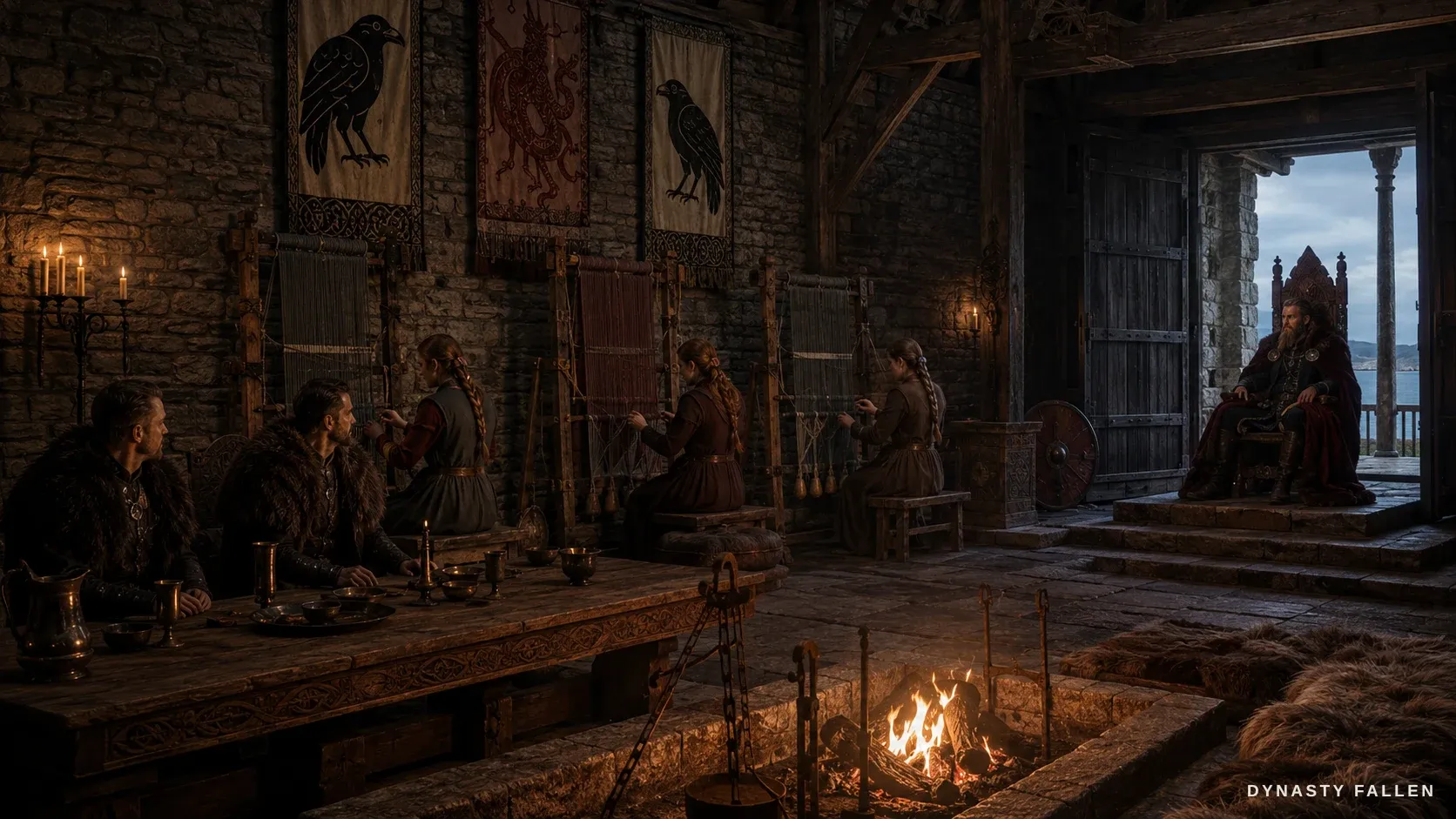
Vol. IX follows her arc in three acts — The Witch Found, Mother of Kings, The Bog — from the frontier-girl in the Sámi hut to the queen who named the arrow at Fitjar to the bog-walker at Haraldskær. The instrument that defines the sound is the tagelharpa with bone flute and jaw-harp accents, the spine is doom-folk Norse metal in a chest-anchored mezzo register with no soprano lift, and the discipline is the witch-queen frame: she sees the arrow before it flies; she names the man before he dies; she rules from a hall the camera barely visits, and the men die on shores she never walks.
Album in active production. 10 of 10 tracks released.