What this song renders
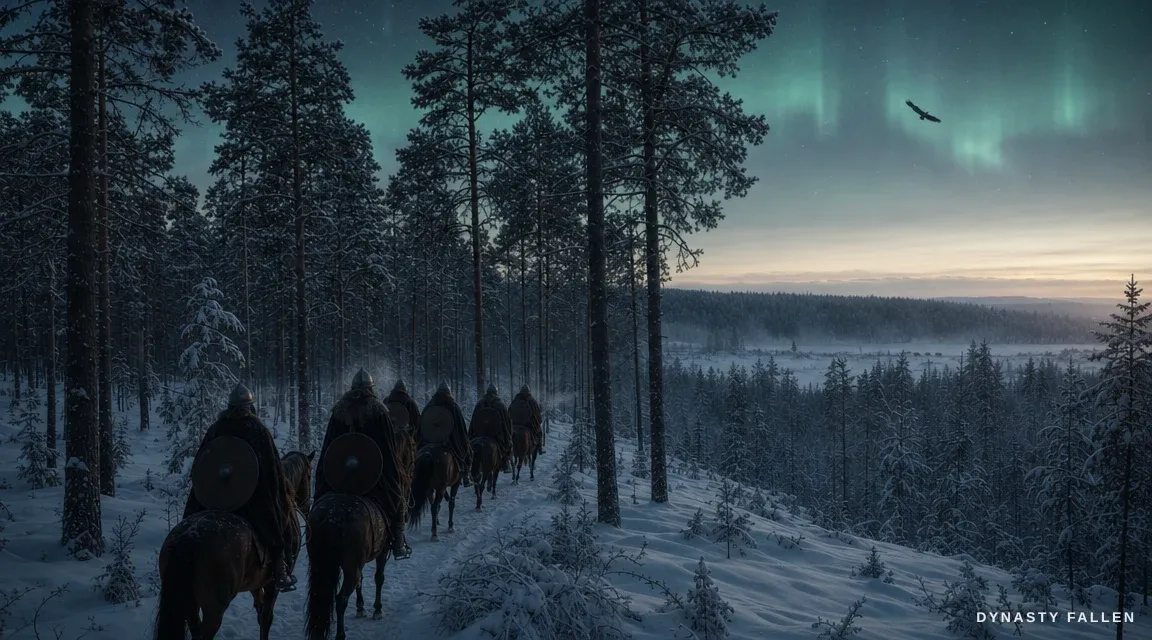
Snorri Sturluson’s Heimskringla, written c. 1230 from older saga tradition, places the episode on the Finnmark / Sámi frontier — the inland zone north of the Norse settlement belt where, in the medieval Norse imagination, seiðr-craft survived in its most archaic form. The narrative: Erik’s men ride inland, find a young woman alone in a turf-roofed hut with two Sámi wizards, learn she has been kept there to learn the craft — she has been the wizards’ lover so they would teach her. She asks Erik’s men to kill the wizards in their sleep. They do. She rides south with them and becomes Erik’s queen. The album takes this version because it is the version in which Gunnhild *chose*.
The historical record contradicts itself sharply on this point. Historia Norwegiae (Latin, c. 1170–1220) and Ágrip (Old Norse, c. 1190) record a different origin: Gunnhild as the daughter of Gorm the Old of Denmark and sister of Harald Bluetooth — a political marriage, no Sámi-frontier hut, no seiðr-bargain, no wizards. Both medieval traditions are older than Heimskringla. Modern scholarship has not resolved which to take seriously. The album takes Snorri (see the Truth, Saga & Legend page for the contrasting tradition). The opening track lands the saga origin within the first ninety seconds and lets it sit.
What’s documented is narrower than the saga: a queen named Gunnhild was the wife of Erik Bloodaxe, was the mother of the Eríkssynir, and ruled Norway in fact through her son Harald Greycloak for nearly a decade. The seiðr-frontier-hut origin is Snorri’s. The album commits to it, and the Sámi peoples are rendered as a coherent people on their own land — not as the saga’s exoticised ‘sorcerer’ trope.
Saga-only. The Sámi-hut origin appears in Heimskringla and nowhere else; the continental tradition contradicts it. The album commits to the Heimskringla witch-queen frame and the Truth & Legend page documents the contradiction openly.