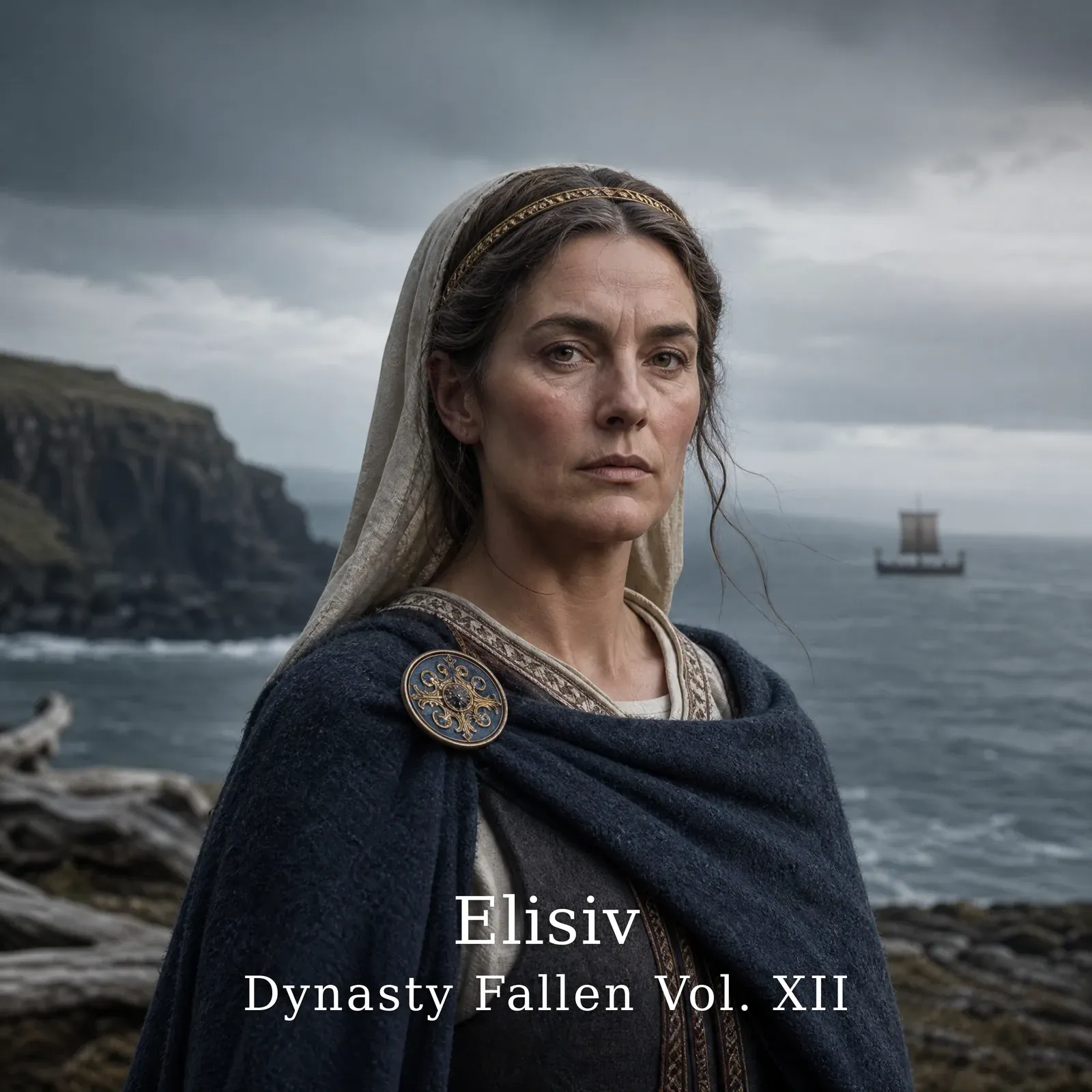
Dynasty Fallen · Vol. XII

Elisiv
The Last Sight

Elisiv of Kiev — the Rus princess who watched the Viking Age end from the edge of the world.
The age did not fall at the bridge. It fell in her. The last queen of the last great Viking king, watching the end of the age from Orkney through a sight the album invents — and tells you it invented.

The story

Eleventh century
Kyiv, Norway, and the Orkney headland
The last hour of the Viking Age, seen from its edge

Elisiv of Kiev — Elizaveta Yaroslavna, born c. 1025 — was a Rus princess, daughter of Yaroslav the Wise and his Swedish queen Ingegerd, and the wife of Harald Sigurdsson, Hardrada, the last great Viking king. Her sisters married into the royal houses of France and Hungary; she married north, to the Varangian who had served in Kyiv and Constantinople and returned with a fortune in southern gold. Vol. XII watches the end of the Viking Age through her — from the edge of the world, in Orkney, where the kings’ sagas say she waited while the fleet went south to Stamford Bridge in September 1066, and where, in the same hour her husband fell, her daughter Maria died.

She is almost entirely silent in the record. There is no charter, no portrait, no Rus chronicle entry naming her. She survives in the contemporary verse of Harald’s court poets, in a network of dynastic marriages, and — for everything that makes her a character — in Snorri Sturluson’s Heimskringla, written some 165 years after she lived. The campaign that killed her husband is one of the best-documented events of the eleventh century. The woman who waited it out is one of the least. The album works in that gap.

“The age did not fall at the bridge. It fell in me.”

The arc is a deliberate descent. It opens warm — the gold years, the love story, the Gamanvísur verses Harald really wrote about the woman in Garðar — because the convergence only lands if the listener has been given something to lose. Then it leaves: the fleet sails, three hundred ships on the tide, and the doom arrives. Then the hour: Stamford Bridge, the surprise, the armour left on the ships on a hot day, the lone Norseman holding the span until the spear comes up from beneath; and the convergence — the arrow at Harald’s throat and Maria falling beside her mother, two deaths one beat apart and three hundred miles between them. Then the carrying: the broken fleet home in twenty-four hulls, the boy who never drew his blade steering the dead king’s ship, and what the women carried when the men were done dying.

The album’s one invention is the sight. There is no source for Elisiv as a seer; the second sight is the device that lets a woman three hundred miles from the battle narrate the battle, and it is the catalogue’s first openly fictional lens on a fully documented world — the Last Kingdom model, the invented eye on the real age. Everything around the sight is in the record: the marriage, the daughters, the invasion, the bridge, the annihilation, the twenty-four ships, the long peace that followed under Olaf Kyrre, the blood that survived into the crowns of Denmark and Sweden through Ingegerd. The sight is ours, and the Truth & Legend page says so plainly — alongside the harder admission that the album’s whole stage, Elisiv in Orkney at all, rests on Snorri’s account over the older sagas that put Tora there instead.

Vol. XII is Ritual Nordic doom-elegy — a Wardruna/Heilung ritual-folk floor of drone, frame-drum heartbeat, and galdr chant under a slow doom engine, an incantatory mezzo that lifts to a controlled keen only at the sight’s peaks. It is the catalogue’s first twilight album: not a warrior-woman at the height of her age, but a queen at its death, reading the ending before the sea can tell her.

Album in active production. 5 of 6 tracks released. The remaining 1 drop through the rest of the cycle.

Music videos

Out now.

The album opens warm in Kyiv — the gold Harald sent home, the Rus princess he crossed the world to win — then walks the listener down into the grey: the fleet leaving Orkney, the battle at Stamford Bridge, and the hour the age ended. The cold open lands the love story first, because the convergence only hurts if you had something to lose.

Track list

Six tracks. Four acts.

Four acts: the gold years of the love story; the leaving, as the fleet sails south and the doom arrives; the hour, the last stand at the bridge and the convergence of two deaths three hundred miles apart; and the carrying, the broken fleet home and what the women carried when the men were done dying.

Questions

About Elisiv.

The short answers — with links into the lyrics and the annotated history where the record gets interesting.

Who was Elisiv of Kiev?
Elisiv (Elizaveta Yaroslavna, born c. 1025) was a Rus princess — daughter of Yaroslav the Wise of Kyiv — who married Harald Sigurdsson, ‘Hardrada,’ the last great Viking king of Norway. Her sisters married into the royal houses of France and Hungary; she married north, to the Varangian who returned from Constantinople with a fortune in Byzantine gold. Dynasty Fallen Vol. XII follows her across ten tracks, watching the end of the Viking Age in 1066 from the edge of the world.
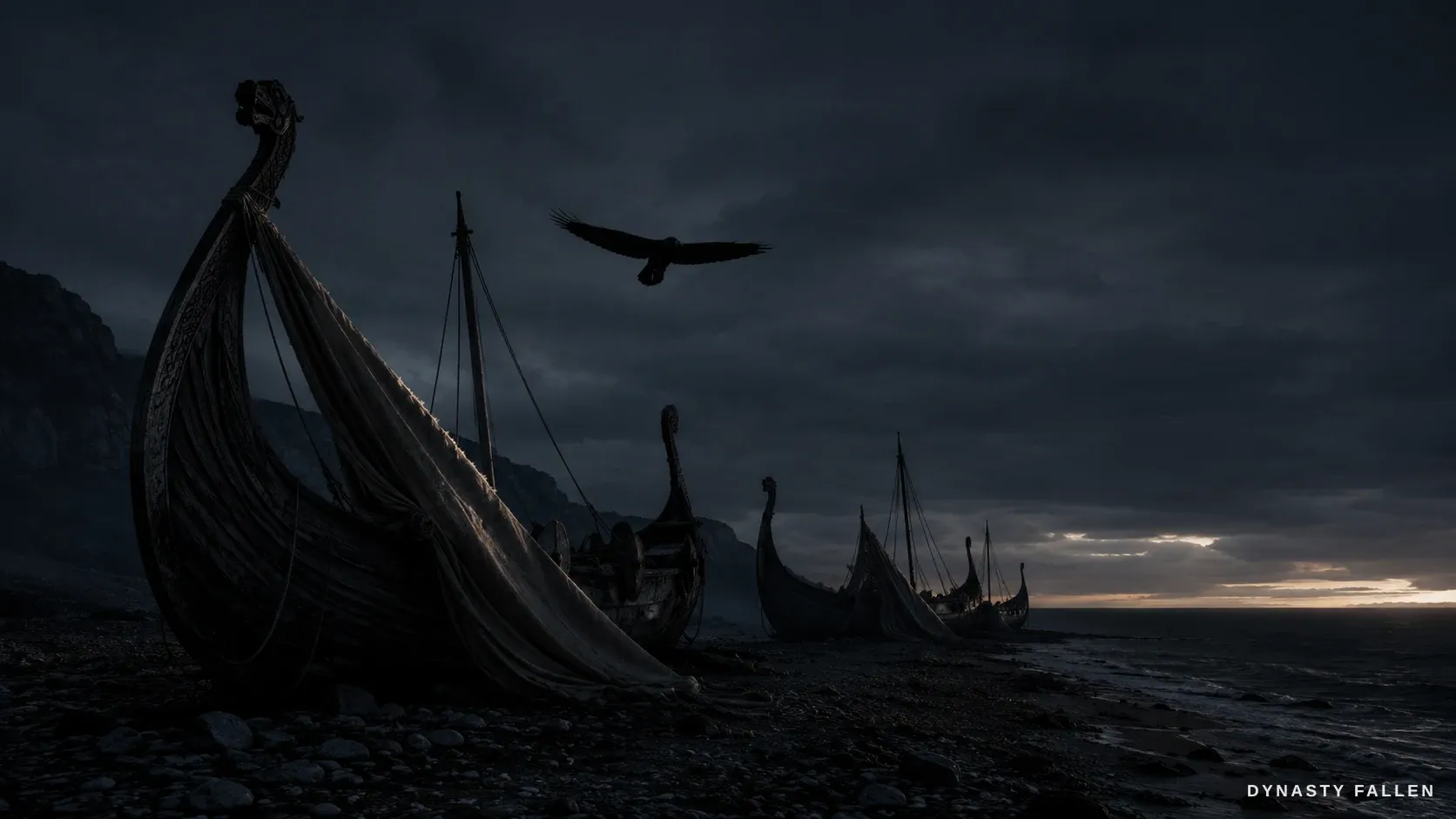
A dusk launch-shore in Orkney with beached longships on the grey shingle — the edge of the world where the sagas place Elisiv.
Was Elisiv of Kiev a real person?
Yes — but a barely-documented one. She is real: a Rus princess named in contemporary skaldic verse and fixed in a web of dynastic marriages. But almost everything that makes her a character — the Orkney headland, her daughter’s death in the same hour as her husband’s — comes from Snorri Sturluson’s Heimskringla, written around 1230, some 165 years after she lived. The campaign that killed her husband is one of the best-documented events of the eleventh century; the woman who waited it out is one of the least.
Who was Harald Hardrada?
Harald Sigurdsson, called Hardrada (‘hard ruler’), was king of Norway and the last great Viking warlord. As a young man he served in the Varangian Guard in Constantinople, returned east with a fortune in Byzantine gold, took the Norwegian throne, and in 1066 invaded England to claim it. He won at Fulford near York, then was killed days later at Stamford Bridge — the battle traditionally marked as the end of the Viking Age.
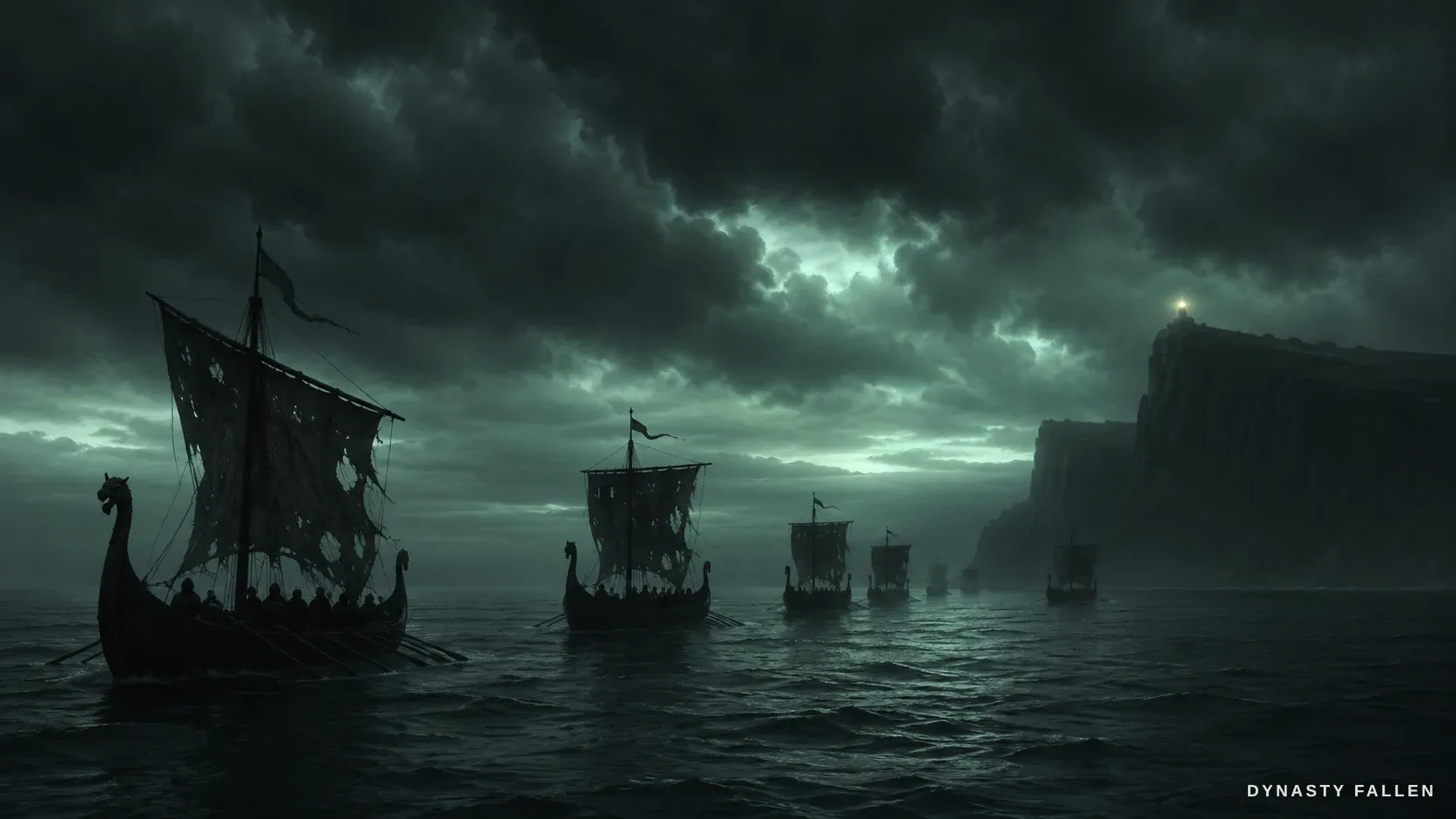
Harald’s longship fleet dwindling into an aurora-lit distance over a cold northern sea.
How did the Viking Age end at Stamford Bridge?
In September 1066 Harald invaded northern England with a large fleet, won at Fulford, then was caught by surprise by King Harold Godwinson’s forced march from the south. Harald and most of his army were killed on 25 September 1066; the survivors needed only twenty-four ships of the great fleet to sail home. Three weeks later Harold Godwinson himself fell to William the Conqueror at Hastings. The year 1066 is conventionally taken as the close of the Viking Age — the hour the album is built around.
Did Elisiv really have second sight?
No. The ‘sight’ is the album’s one acknowledged invention — there is no historical source for Elisiv as a seer. The device lets a woman three hundred miles from the battle narrate the battle, the catalogue’s first openly fictional lens on a fully documented world, and Dynasty Fallen labels it as fiction throughout. Everything around the sight — the marriage, the daughters, the invasion, the bridge, the annihilation, the twenty-four ships — is in the record. See the Truth & Legend page.
An Orkney völva flinging herbs into the divination fire, the flames erupting in a burst of sparks.
What happened to Elisiv’s daughters, Maria and Ingegerd?
Snorri’s Heimskringla says Maria died suddenly in the very hour her father fell at Stamford Bridge — a saga coincidence rather than a documented fact. Ingegerd survived and married well: she became queen of Denmark and later of Sweden, carrying Elisiv’s blood forward into both crowns.
Was it really Elisiv who waited in Orkney, or Tora?
This is the album’s most honest problem. The older saga compilations — Morkinskinna and Fagrskinna, both c. 1220 and predating Snorri — say it was Tora Torbergsdatter, Harald’s other consort, who went to Orkney; only Snorri’s later Heimskringla puts Elisiv there, and modern scholarship leans toward Tora. The album knowingly builds its whole stage on the weaker, later account — and says so openly on its Truth & Legend page.
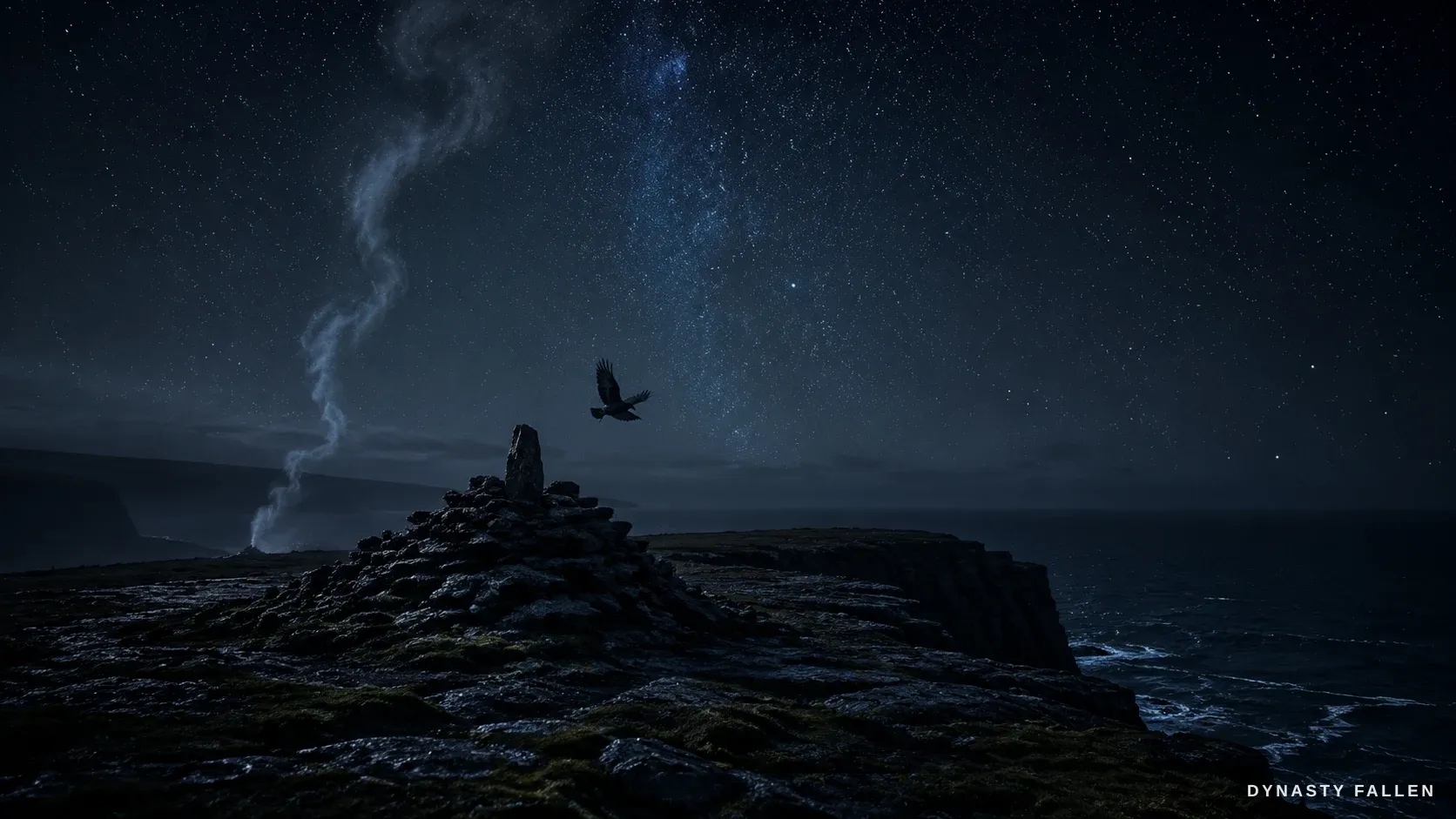
A dark Orkney headland at night, a raven lifting from a low grave-cairn under cold stars.
Are the ‘twenty-four ships’ real?
The figure comes from the sagas: Harald sailed with a great fleet (the Anglo-Saxon Chronicle says three hundred ships) and the survivors of Stamford Bridge needed only twenty-four to carry them home. It is best read as an image of catastrophic loss rather than a literal casualty count — many of the ships were the Riccall guard that never fought — but the shrinking of the fleet is real, and it is the spine of the album’s hinge track.
A thin, broken line of Norse longships limping home across a grey sea — the survivors of Stamford Bridge.

Where to listen

Ten tracks. The album lands as a single descent — warmth to doom to a dawn-note.

Stream the album on your service of choice. Music videos go up on YouTube.