v.

The False Dawn

Act II — The Leaving Released Approx. 4:45
Verse 1
Two lines spoken low on an Old Norse breath, then the voice warms hollow and falls toward doom — frame-drum heartbeat, a falsely-warm lurr horn over low drone.

They called it a victory,
they called it the turning,
They wrote the north was won at Fulford,
they sent it home on a fair glad wind,
they forgot to count the days he had left,
And I did not light the fire,

Pre-Chorus
Tightening, the drone entering under the warmth, a doubt.

A victory rode home to me,
And I knew it for a lie,

Chorus 1
A false major-key lift that curdles, half-time war drums entering, the women's chorus rising.

They called it the dawn,
the false dawn, the last good day,
the north won a field and lost an age,
and the fire I would not light.

Verse 2
Sung, darkening — detuned guitar entering, frame drum, a galdr chant underneath.

Tostig's crown was borrowed blood,
a brother's war on a brother's land,
the men sang Fulford in the hall,
and I saw the bridge behind the song,

Pre-Chorus 2
Thickening, the drone darker, the lurr horn low.

A victory rode home to me,
And I counted what it cost,

Chorus 2
The false lift curdling to minor, half-time war drums, the women's chorus louder.

They called it the dawn,
the false dawn, the last good day,
the north won a field and lost an age,
and five days left to fall.

Bridge
Drops to bare drone, the cheer goes grey, a restrained keen.

The hall was loud with winning,
the mead went round, the harps were bright,
and only I could feel it turn,
the dawn go grey behind the cheer,
five days of song, and then the sea,
would bring them back as twenty-four,

Instrumental
Eight bars — the lurr horn over the drone, the cheer curdling, half-time war drums beneath.
Final Chorus
A heavy minor swell, lurr horn, low women's chorus — the warmth gone.

They called it the dawn,
the false dawn, the last good day,
the north won a field and lost an age,
and I did not light the fire,
five days of song,
and then the grey came home.

Outro
The drone settles, the frame drum stops — dry, whispered, a hard cut.

They sang the victory,
I was already in mourning.

The history

20–25 September 1066 · the Orkney hall · word of the Fulford victory reaches the household, five days before Stamford Bridge

Source: Heimskringla — Haralds saga Sigurðarsonar; the Anglo-Saxon Chronicle (MSS C, D, E) and John of Worcester on Fulford; skaldic verse

Named figures

  • Elisiv of Kiev The waiting queen; the only one in the hall who distrusts the victory, because the sight has already shown her the return
  • Harald Hardrada Won the field at Fulford near York on 20 September — the last good day; dead five days later at Stamford Bridge
  • Tostig Godwinson The exiled English earl whose grudge against his brother launched the invasion — the ‘borrowed blood’ under the celebration
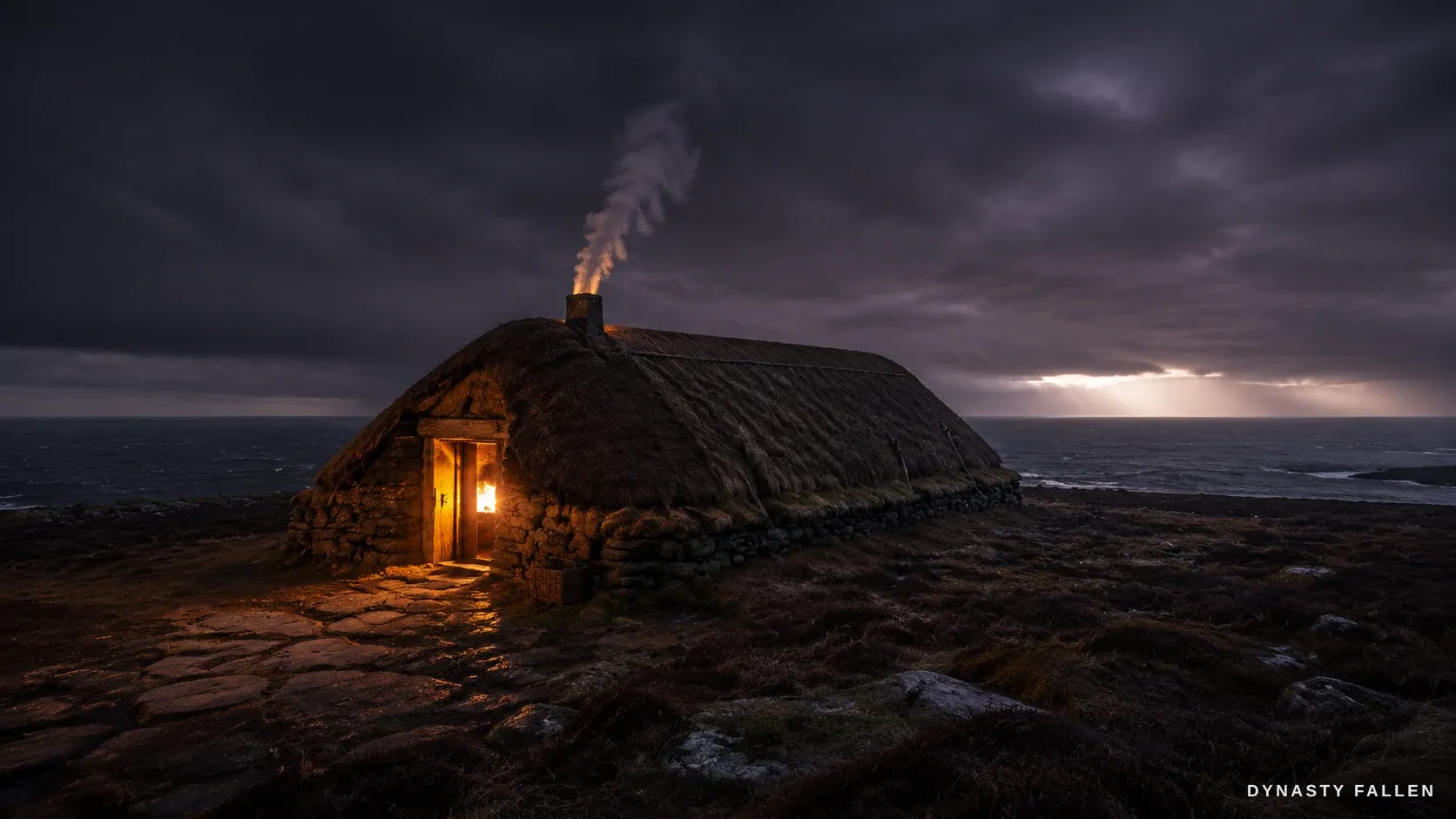
The turf-and-stone longhouse at dusk, warm firelight in the doorway as the light fails — the hall lifting on the false good news.

What this song renders

The victory was real, and so was the brevity of it. On 20 September 1066 Harald and Tostig crushed the northern earls Edwin and Morcar at Fulford, just south of York — a clear Norse win, attested by both the English annals and the sagas. Word of it would have travelled north as triumph. The track sits in that five-day window between Fulford and the catastrophe at Stamford Bridge on 25 September: the last good news, and the household lifting on it.

The invasion that produced the victory was Tostig’s doing. The exiled earl — Harold Godwinson’s own brother — urged Harald east and joined the fleet, the ‘borrowed blood’ the lyric names at the edge of the frame. That the campaign was launched at Tostig’s urging, that it won at Fulford, and that it ended at the bridge are among the most securely documented facts in the whole album, multiply attested in near-contemporary English sources.

What the song adds is the seer’s knowledge. The ‘false dawn’ only reads as false because Elisiv — through the album’s one invented device, the sight — has already counted the fleet home as twenty-four ships. The hall’s hope is genuine; her refusal to share it is the fiction the album owns. Everything around it — Fulford, Tostig, the five days, the bridge — is in the record.

Verdict

The Fulford victory, Tostig’s role in launching the invasion, and the five-day gap before Stamford Bridge are documented; Elisiv’s presence in Orkney is Snorri’s account over the older sagas, and the sight that makes the victory ring hollow is the album’s acknowledged invention.

See the full Truth, Saga & Legend entry