iv.

They Did Not Read the Smoke

Act II — The Leaving Released Approx. 4:40
Verse 1
Two negation lines spoken low and dry over a frame-drum heartbeat, a lone bone flute and a bowed drone — an Old Norse breath of a charm — then the band warms and the doom floor enters under the sung remainder.

They did not ask the bones,
they did not read the smoke,
They simply sailed, and the old gods watched,
The seeress turned the knucklebones cold,
The smoke bent north, the wrong way home,
And no Christian man would look,

Pre-Chorus
Tightening; the frame drum slows, the drone swells, the galdr chant enters.

The cross is new, the smoke is old,
And one of them was lying,

Chorus 1
The first crushing doom swell — half-time war drums, detuned guitars, a low women's-chorus drone carrying the seer's voice.

They did not read the smoke,
they did not hear the stones,
the old ways died the day they sailed,
and I read it all alone.

Verse 2
Sung doom, frame drum and detuned guitar, galdr chant and throat-sung overtone underneath.

It came to me, the foreign one,
the queen the priests would not believe,
I saw the bridge before the bridge,
I saw the arrow in the smoke,

Pre-Chorus 2
Thickening; the drone darker, a lurr horn low underneath.

The cross is new, the smoke is old,
And I knew which one was true,

Chorus 2
Crushing doom, half-time war drums, lead guitar holding, the women's-chorus drone louder — the mutation lands the turn.

They did not read the smoke,
they did not hear the stones,
the old ways died the day they sailed,
and the sight came home to me.

Bridge
Half-time stomp, not a drop — bare drone and throat-sung overtone, a high keening lift on the prophecy.

This is the last smoke, read true,
the last bones to fall and mean,
the gods go down with the ships,
the sight goes dark with the age,
but I read it, I read it whole,
the last to see the north fall,

Instrumental
Eight bars, roughly eighteen seconds — bone flute and galdr chant over the drone, the frame drum holding the half-time heartbeat.
Final Chorus
A massive, slow final doom swell — lurr-horn hits, the women's-chorus drone locked, lead guitar holding.

They did not read the smoke,
they did not hear the stones,
the old ways died the day they sailed,
and the sight came home to me,
the last smoke, read alone,
the last to read the grey.

Outro
The drone settles, the frame drum stops, a dry whispered confession, hard cut.

They burned the bones for the cross,
I kept the smoke in me.

The history

1066 · the Norse Earldom of Orkney · a völva reads the divination smoke as Harald’s fleet rigs to sail, while the new cross silences the old sight

Source: Heimskringla — Haralds saga Sigurðarsonar; modern scholarship on seiðr and the völva (Neil Price, The Viking Way); the eleventh-century Christianisation of the Norse world

Named figures

  • Elisiv of Kiev The Rus-born queen; in the album’s invention, the last vessel of a dying second sight — the outsider the priests will not believe
  • The seeress (völva) An Orkney practitioner of seiðr, casting knucklebones and reading the divination smoke — the old ways in their last hour
  • The new cross Eleventh-century Christianity ascendant in the North, silencing the old sight — rendered as a restrained period crucifix, not caricature
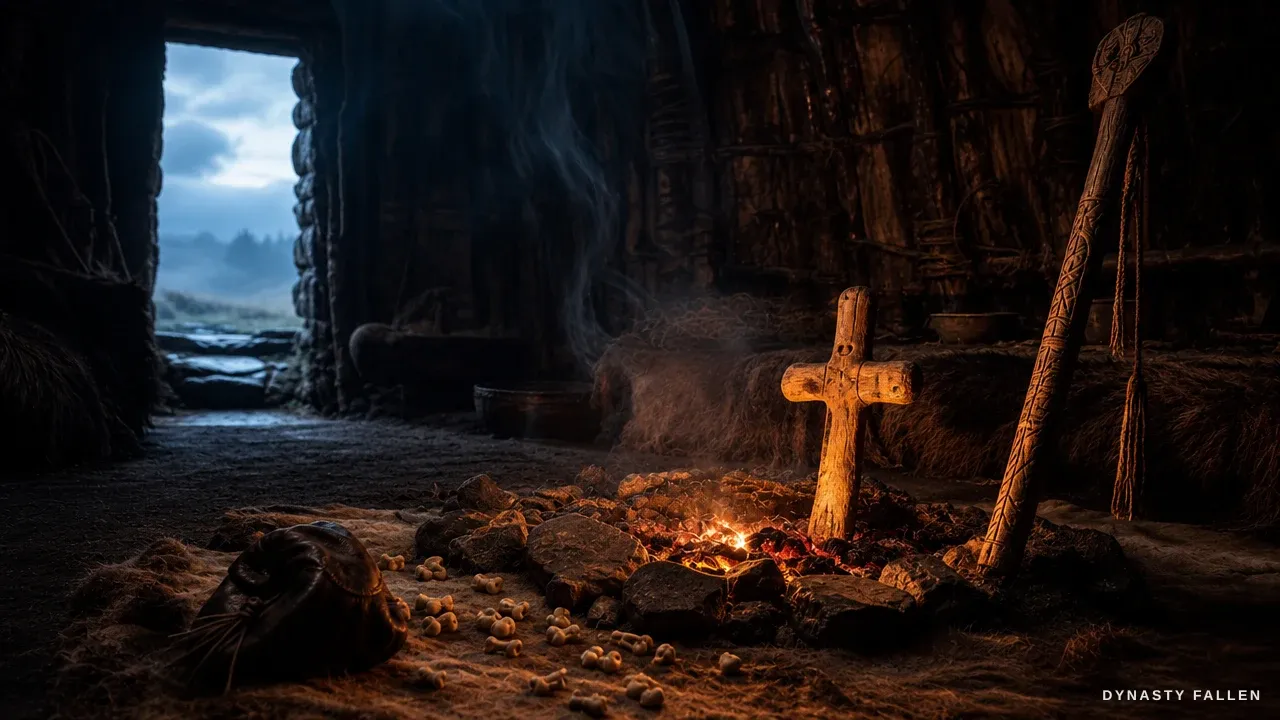
A plain pale-wood eleventh-century crucifix standing in the drifting divination smoke — the new cross over the old sight.

What this song renders

The practice the song renders is real. Seiðr and divination — reading omens, casting lots, the völva with her staff and her pouch of bones — are well attested across the Norse sources, and the eleventh century is exactly when that world was being overwritten. By 1066 the North was generations into conversion; the cross was ascendant and the old seiðr was receding into memory and disrepute. The track sets the two faiths against each other at the moment one is winning.

What is documented is the catastrophe the omen foretells: Harald’s invasion sailed, and the army was annihilated at Stamford Bridge. What is the album’s own invention is the sight — the second sight that lets a woman three hundred miles from the battle see the bridge and the arrow before they happen. The album says so plainly: the sight is its acknowledged fiction, the lens through which the documented departure is read.

That Elisiv is the one who carries it is the album’s framing, not the record’s. The sagas put her on the headland (the older tradition names Tora instead); the divination passing to her, and her being the ‘foreign queen the priests would not believe,’ is the song’s dramatisation of a real tension — a Rus-Orthodox outsider inside a newly-Latin-Christian world.

Verdict

The völva, seiðr divination, and the cross displacing the old ways are historically grounded; the coming catastrophe is documented; the second sight that reads the battle from Orkney is the album’s acknowledged invention, and Elisiv carrying it is the album’s framing over the older Tora tradition.

See the full Truth, Saga & Legend entry