The story
Third century AD
Palmyrene Empire and Rome
From the Syrian desert to the Roman triumph
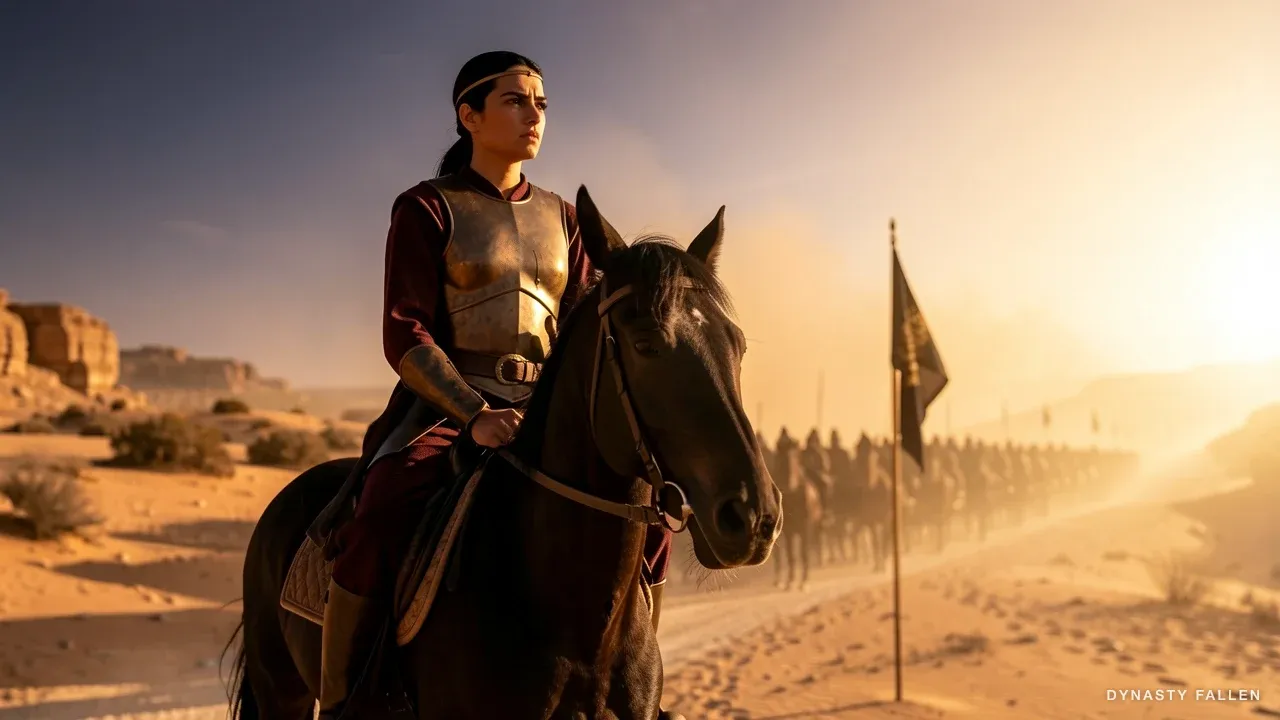
Zenobia (c. 240–274 AD) was Queen of Palmyra, the Syrian desert city that sat between Rome and Persia and made itself wealthy translating between them. After her husband Odaenathus was assassinated, she ruled in her son’s name — and then, very quickly, in her own. Within five years she had conquered Egypt, Syria, and parts of Asia Minor, declared herself Augusta of the East, and minted coins with her own face.
Rome answered with Aurelian. The legions came east in 272 AD. The Battle of Emesa broke her cavalry; Palmyra fell. She was captured trying to flee to Persia, paraded through Rome in golden chains, and — in the most defiant act of all — given a villa near Tivoli, where she lived out her years writing, raising children, and outlasting the emperor who had defeated her.
“She wore the chains as jewellery.”
Vol. V follows her arc in three acts: Rise, Conquest, and Fall & Defiance. Ten tracks. The Battle of Emesa is the centrepiece, instrumental, an axis the album turns on. Track 10 closes the cycle on the same desert it opened on — and on the queen’s name, which Rome could not erase.