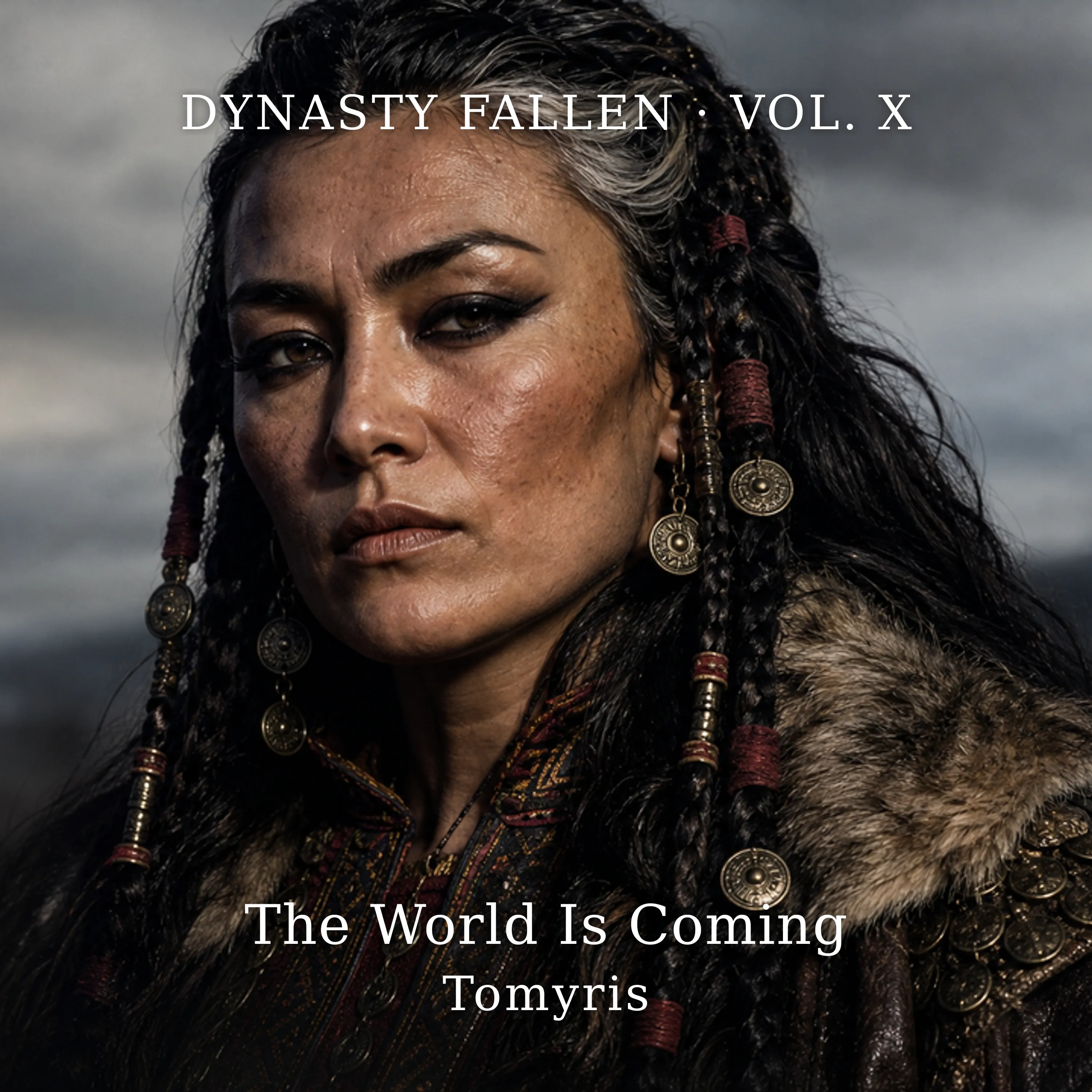
Dynasty Fallen · Vol. X

Tomyris
of the Massagetae

The queen who killed the king the world thought could not be killed.
History remembered Cyrus. History buried the woman who ended him.

The story

Sixth century BC
The Central Asian steppe
East of the Caspian, across the Jaxartes

Tomyris (fl. c. 530 BC) was queen of the Massagetae, a confederation of Iranian-speaking nomadic horse-archers ranging the open steppe east of the Caspian Sea. She ruled in her own right, as a widow, over a people with no cities and no walls — the kind of country an empire cannot conquer by taking a capital, because there is no capital to take.

When Cyrus the Great — founder of the Persian Empire, the king who had swallowed Media, Lydia, and Babylon and had never been beaten — offered her a dynastic marriage, she refused it, recognising the proposal for what it was: conquest by another name. So Cyrus came with the army instead. He crossed the river into her country, and used a trap dressed as a feast: a camp abandoned to the Massagetae with the wine still set out. Tomyris’s son Spargapises, who had never tasted wine, drank, was taken in his sleep, and — waking in Persian chains and understanding what had been done — killed himself. His mother swore by the sun, the only god the Massagetae worshipped, to give Cyrus his fill of blood.

“You thirsted for blood, Cyrus. Now drink your fill.”

Her cavalry met the Persians on her own ground and destroyed them. Cyrus the Great died on the field — and Tomyris, Herodotus tells us, had a skin filled with human blood, searched the dead until she found the king, and dunked his head in it to keep her word. Vol. X follows the arc in three acts: The Open Country, The Trap & The Vow, and The Collecting. Ten tracks. The battle at the river is the structural peak; the album closes on the same grass it opened on — the country that outlasted the empire, and remembered what the imperial page left out.

Album in active production. 10 of 10 tracks released.

Music videos

Out now.

Ten tracks tracing the woman the imperial record refused to name — from the open steppe with no walls to the riverbank where the founder of the Persian Empire died, and the wineskin she filled to keep her word.

Track list

Ten tracks. Three acts.

A chronological arc through three acts: the open country before the empire came, the trap and the vow that turned the war, and the collecting of a debt sworn by the sun.

Questions

About Tomyris.

The short answers — with links into the lyrics and the annotated history where the record gets interesting.

Who was Tomyris of the Massagetae?
Tomyris (fl. c. 530 BC) was the queen of the Massagetae, a confederation of Iranian-speaking nomad horse-archers on the open steppe east of the Caspian Sea. She ruled in her own right as a widow and mother, over a people with no cities and no walls. She is remembered above all for defeating and killing Cyrus the Great, founder of the Persian Empire, when he invaded her country. Dynasty Fallen Vol. X traces her whole arc across ten tracks.
The open steppe east of the Caspian at cold dawn — the country with no walls that Tomyris ruled.
Did Tomyris really kill Cyrus the Great?
According to Herodotus, our principal source, yes — Cyrus crossed into Massagetae territory, lost a battle to Tomyris’s cavalry, and was killed on the field around 530 BC. But the manner of his death was disputed even in antiquity: other writers give him a wound fighting a different people, or a peaceful death in bed. What is firm is that Cyrus died on campaign against steppe nomads beyond his north-eastern frontier; the queen-killed-the-king version is Herodotus’s, which he himself flagged as one of several. The Truth & Legend page sorts it out.
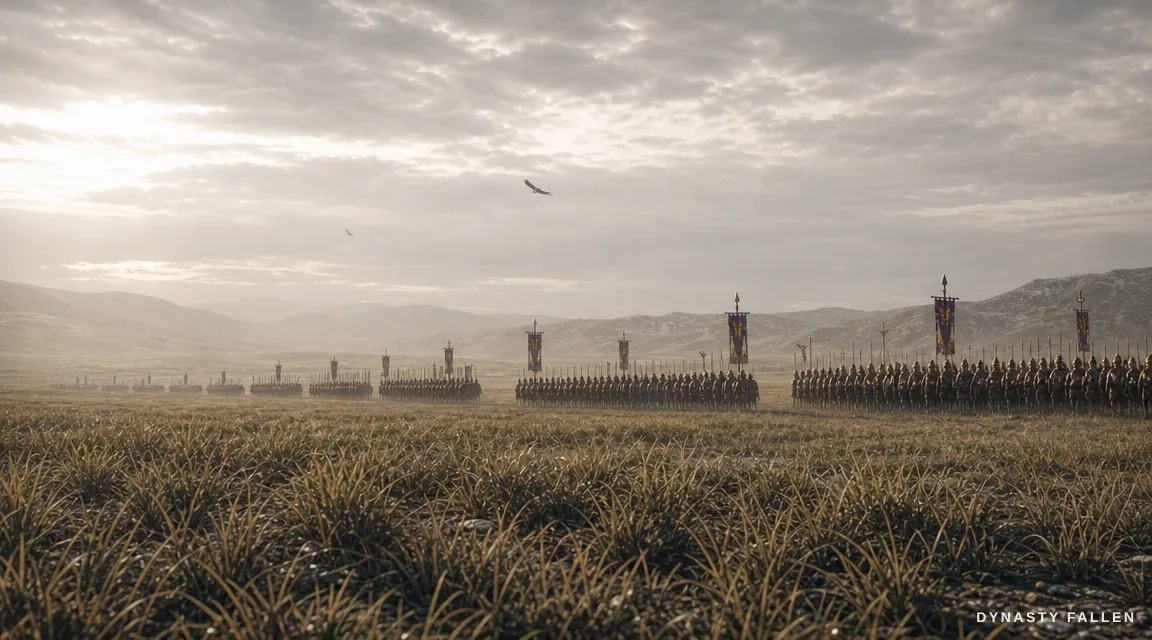
The Persian army's columns on the southern horizon — the empire arriving at the steppe.
How did Cyrus the Great actually die?
The honest answer is that nobody knows for certain. Herodotus has him killed in battle by the Massagetae; Ctesias has him dying of a wound fighting the Derbices; Xenophon has him dying peacefully in bed surrounded by his sons. The Babylonian chronicles confirm only that his reign ended and his son Cambyses succeeded in 530 BC. The dispute itself is the central historical fact — and the album takes Herodotus, while being open about the alternatives on the Truth & Legend page.
Who were the Massagetae, and where did they live?
The Massagetae were a real Iranian-speaking nomad confederation — kin to the Scythians and Saka — ranging the open steppe east of the Caspian Sea, in what is now Central Asia (roughly modern Kazakhstan, Uzbekistan and Turkmenistan). Herodotus describes them as horse-archers and sun-worshippers who drank mare’s milk and lived on their herds, and the archaeology of the steppe corroborates the culture even where it cannot name the queen.
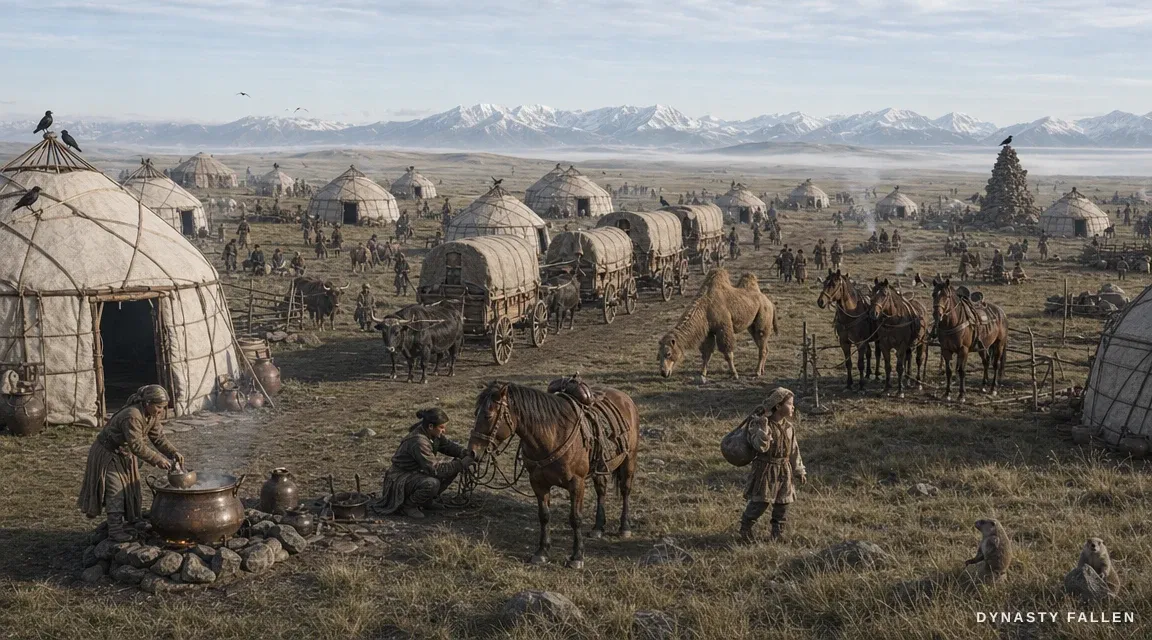
An aerial view of the Massagetae encampment at dawn — yurts, wagons and picket lines of horses.
What religion did Tomyris and the Massagetae follow?
Herodotus says the Massagetae worshipped only the sun, to whom they sacrificed horses — the fastest animal to the fastest god. There were no temples and no idols. The album’s recurring line, the sun is the only god who answers, is drawn directly from this: it is the one religious detail Herodotus reports, and it lines up with what is known of the steppe sun-and-horse cults.
What is the story of the wineskin?
In Herodotus’s account, after Cyrus’s army was destroyed and he was killed, Tomyris had a skin filled with human blood, searched the Persian dead until she found the king, and dunked his head in it — keeping a vow she had sworn after his wine-trap killed her son. It is a saga image, attested only in Herodotus and the writers who follow him, not independently confirmed. The track The Wineskin renders it.
Did Tomyris really say “You thirsted for blood, Cyrus. Now drink your fill”?
The line comes from Herodotus (1.214), writing roughly a century after the events from oral tradition — so it is what a Greek historian reports she said, not a verbatim record. Her own voice survives nowhere. The album quotes the Herodotean line directly because it is the words that carried her memory through history, while being clear that it is saga, not transcript.
Is Tomyris a real historical figure, or a legend?
Both, in a way. A real campaign in which Cyrus the Great died fighting steppe nomads around 530 BC is documented. Tomyris herself, however, survives almost entirely in Herodotus — no inscription, coin, or contemporary record names her — so her queenship, her refusal, the wine-trap and the wineskin are saga built on a documented skeleton. The Truth & Legend page separates what is documented from what is saga and what is later legend.

Where to listen

The album is in release.

Stream the album on your service of choice. Music videos go up on YouTube.