Dynasty Fallen · Vol. VI

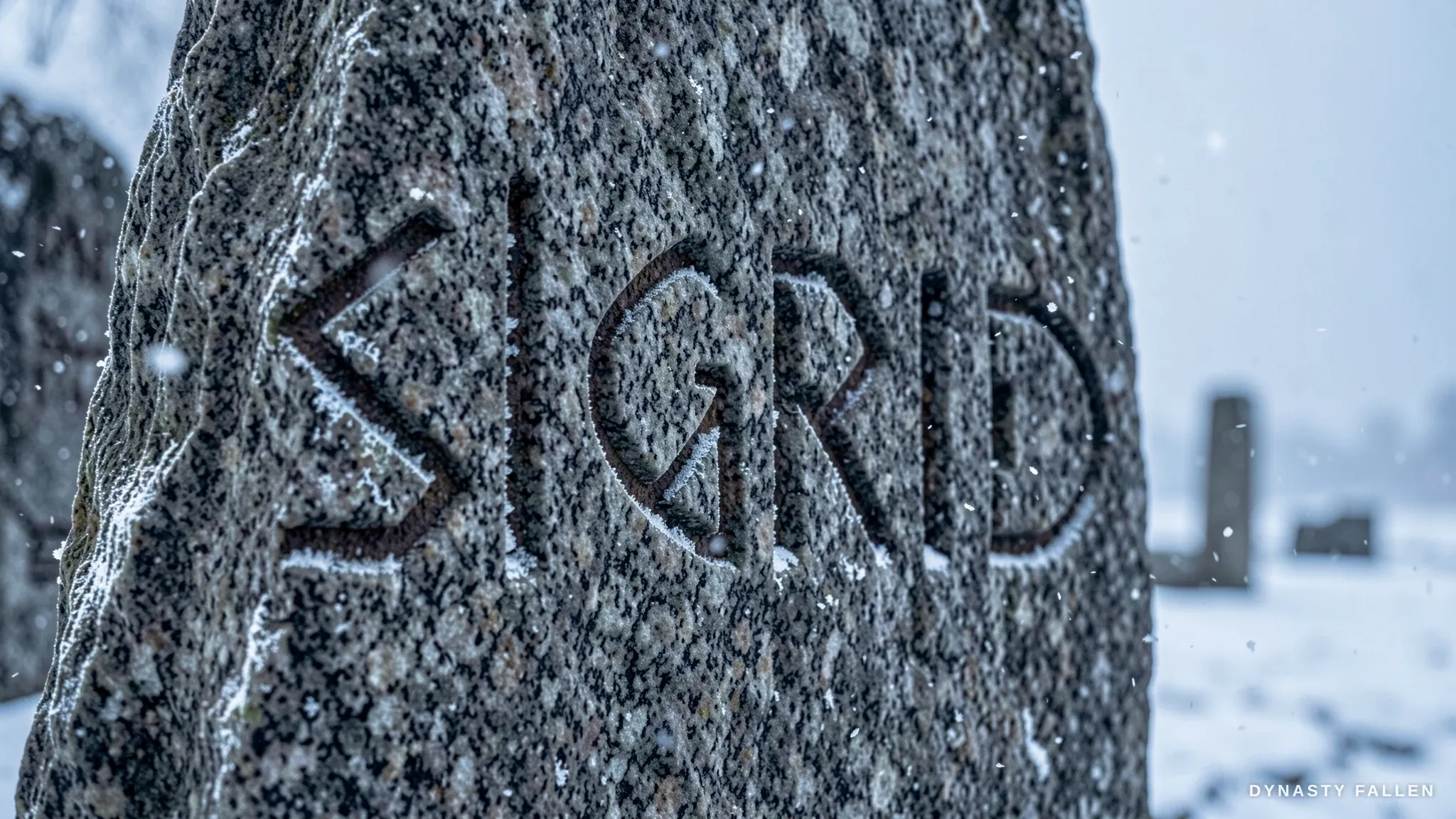
Sigrid
the Haughty

Storråda — the unbought, the unbowed.
The slap of a king became the death of a kingdom. Patience as the sharpest blade.

The story

Late tenth century
Scandinavia
The cold north on the eve of conversion

Sigrid Storråda — Sigrid the Haughty, sometimes the Proud — was a Scandinavian queen at the turn of the eleventh century. Daughter of the chieftain Skoglar Toste, she was real, though glazed in legend by Snorri Sturluson’s sagas. She refused, with her life, to be possessed.

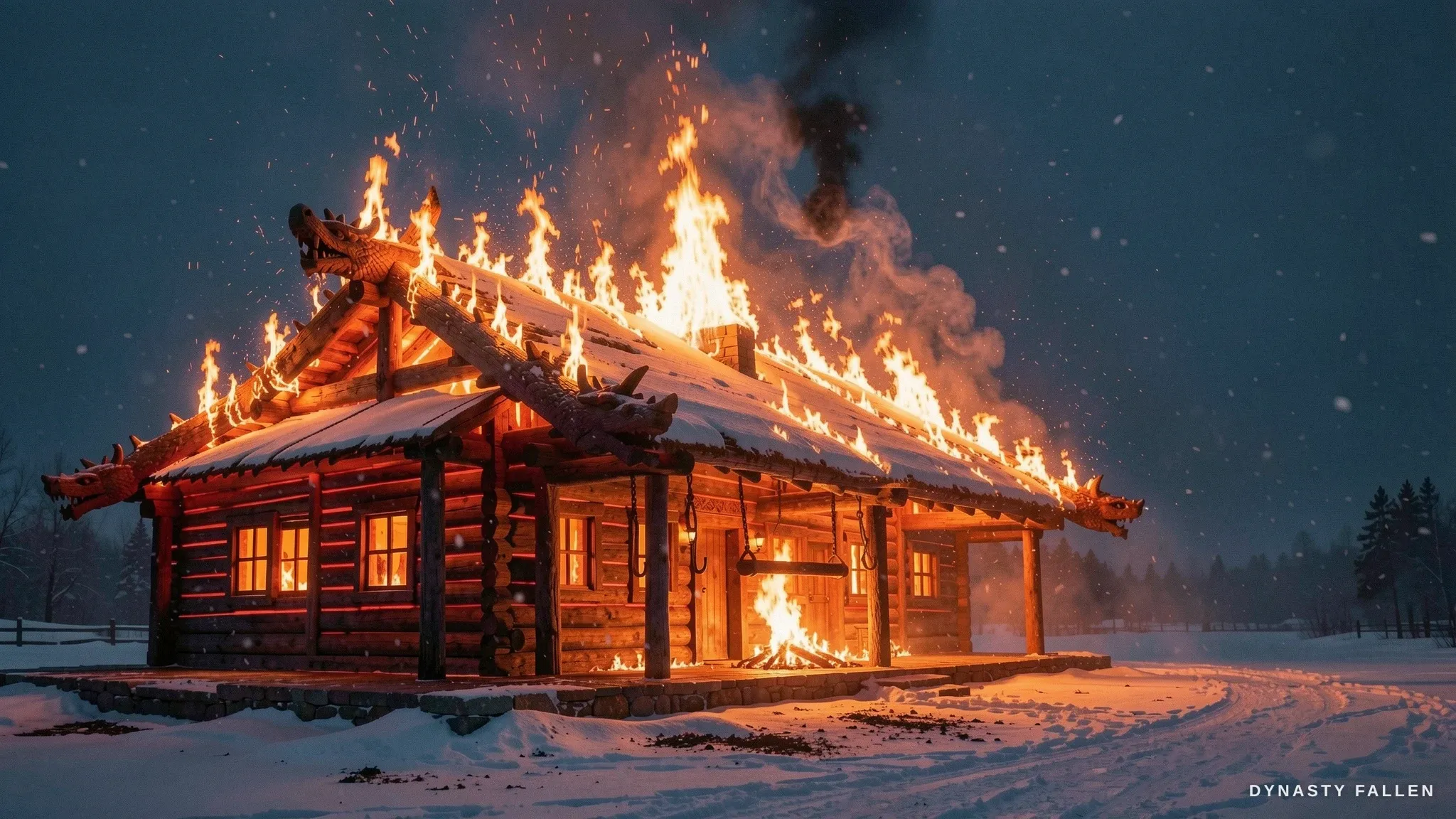
When two minor kings came courting her hall with gifts and demands, she got them drunk, locked the doors, and burned the building down around them. The historians call it apocrypha. The sagas call it instruction: to teach petty kings not to come wooing. Vol. VI takes the sagas at their word.

“This may well be your death.”

Olaf Tryggvason of Norway, newly Christian and famously certain, demanded she convert and marry him. When she refused, he slapped her with his glove. Her answer was four words long. She then spent the next decade making it true — marrying Sweyn Forkbeard of Denmark, weaving a coalition with her son’s Sweden and a vengeful Norwegian jarl, and engineering the ambush at the Battle of Svolder in the year 1000 that put Olaf at the bottom of the sea.

She lived on as a matriarch of dynasties. Her line eventually produced Cnut the Great. Vol. VI follows her arc in three acts — The Refusal, The Curse, The Long Game — from young queen on the iron coast to the still centre of an empire she designed by waiting.

Album in active production. 11 of 11 tracks released.

The world of Sigrid

Her story, place by place.

Drawn from the videos — each frame opens its track.

Music videos

Out now.

The first three tracks open Act I — the queen, the suitors, and the burning of the hall. The album's thesis is set inside the first eleven minutes.

Track list

Eleven tracks. Three acts.

A chronological arc: from young defiant queen to the architect of a king's death — with the Battle of Svolder as the centrepiece of the third act.

Questions

About Sigrid.

The short answers — with links into the lyrics and the annotated history where the record gets interesting.

Who was Sigrid the Haughty?
Sigrid Storråda — “Sigrid the Haughty” or “the Proud” — was a Scandinavian queen of the late tenth and early eleventh century, the daughter of the chieftain Skǫglar-Tósti. In the sagas she burns two minor kings who come courting, refuses to convert to Christianity for Olaf Tryggvason of Norway, and after he strikes her with his glove helps engineer the coalition that kills him at the Battle of Svolder. She then marries Sweyn Forkbeard of Denmark and lives on as the matriarch of a dynasty that produced Cnut the Great. Dynasty Fallen Vol. VI tells her arc across eleven tracks.
Sigrid on the stone porch of her hall above the frozen fjord, turning to face the camera with a predatory calm.
Did Sigrid the Haughty really exist?
It is genuinely disputed. The vivid Sigrid — the burnings, the slap, the patient revenge — comes almost entirely from Snorri Sturluson’s Heimskringla, written around 1230, roughly 250 years after the events. Many modern historians treat her as a literary composite, possibly conflated with the Polish princess Świętosława, the wife of Sweyn Forkbeard. The cautious historical figure married a king of Denmark and mothered a king of Sweden; the rest is saga. The album leans into Snorri’s queen while being honest about the line — see the Truth & Legend page.
Did Sigrid really burn two kings alive in her hall?
In the saga, yes — Snorri says she had two lesser kings who came wooing burned alive in her hall, “to teach petty kings not to come courting.” It is one of the most famous scenes attached to her, but it survives only in the saga tradition, not in any contemporary record, and even the sources disagree on how many kings died. We mark it as saga, not documented.
A Norse longhouse fully ablaze against a dark winter sky — the hall Sigrid is said to have burned with her suitors inside.
What was the slap, and did she say “this may well be your death”?
In Snorri’s account Olaf Tryggvason proposes marriage on the condition that Sigrid convert to Christianity. She refuses, he strikes her in the face with his glove, and she answers that this may well be his death. The exact words are Snorri’s — thirteenth-century saga dialogue is always reconstructed — but the episode is the hinge of her whole legend: the insult that she repays, years later, at Svolder.
What was the Battle of Svolder?
Svolder was a naval battle fought around the year 1000, in which a coalition of Sweyn Forkbeard of Denmark, Olof Skötkonung of Sweden, and the Norwegian jarl Eiríkr Hákonarson ambushed and destroyed Olaf Tryggvason’s fleet. Olaf died there — this part is documented. That Sigrid engineered the coalition out of revenge for the slap is the saga’s reading, and the thesis the album runs on: the slap of a king became the death of a kingdom.
Longships colliding at the Battle of Svolder, a ram driving into a stern on the cold Baltic.
Was Sigrid the grandmother of Cnut the Great?
Through the documented marriage to Sweyn Forkbeard, the dynasty that produced Cnut the Great does descend from this line — Cnut was Sweyn’s son. Whether his mother was the saga’s Sigrid or the historical Świętosława is exactly the identity question above, so it is safest to say Sigrid stands at the head of the lineage that ends in Cnut’s North Sea empire, rather than to pin the grandmother claim to a single documented woman.
What does “Storråda” mean?
Storråða is an Old Norse byname usually rendered “the Haughty,” “the Proud,” or more literally “the great-/strong-counselled” — a woman of large schemes. It carries both senses at once: arrogant in the eyes of the men who told the story, and formidable in her planning. The album takes the second meaning as the real one.
What happened to Sigrid — how did she die?
The sources don’t give her a death scene. After Svolder she passes out of the saga as she came into it — as a power behind the throne, the mother and grandmother of kings. There is no recorded date or place of death, which is part of why historians find her so hard to pin down. The album lets her end as she lived: still, in her hall, the woman whose vows were all kept.
The grass-grown ruins of Sigtuna at dusk, where Sigrid's hall once stood.

Where to listen

New tracks drop through the cycle.

Stream the album on your service of choice. Music videos go up on YouTube.