viii.

A Fairy Tale of My Murder

Act III — The Lie Released Approx. 4:05
Verse 1
Two lines spoken, then a hammering balalaika tremolo and pounding double-bass over tubular bells.

They drew me a cartoon, gave me a happy ending,
a singing girl who found her prince instead of a grave,
They turned my murder to a musical,
a sorcerer, a waltz, a kiss,
they sold our bones as a bedtime story,
they gave the lie a golden crown,
they gave me amnesia, not a grave,
as if a song could undo a cellar.

Pre-Chorus

You drew me dancing on my grave,
you made my death a song.

Chorus
A furious soprano lift, female chorus snarling in unison.

This is a fairy tale of my murder,
a cartoon stitched over a grave,
you gave me a prince and a happy end,
and buried the girl you couldn't save,
you sang me back to life — a lie.

Verse 2
Faster, angrier.

You did it after the bones were found,
after the blood had closed the case,
you sold the lie to a new crowd of kids,
who thought my murder had a happy end.

Pre-Chorus

You drew me dancing on my grave,
you made my death a song.

Chorus 2
Heavier, more venom.

This is a fairy tale of my murder,
a cartoon stitched over a grave,
you gave me a prince and a happy end,
and buried the girl you couldn't save,
you sang over the sound of the guns.

Bridge
Half-time, a soprano-lift peak, then it erupts back.

I did not lose my memory,
I lost my life against a wall,
there was no prince, there was no spell,
there was a cellar, and that was all.

Final Chorus
The most aggressive on the album, full female choir.

This is a fairy tale of my murder,
a cartoon stitched over a grave,
you gave me a prince and a happy end,
and buried the girl you couldn't save,
I was murdered. There is no spell.

Outro
A hard cut from the full band, no fade.

No prince.
No spell.
A cellar floor.

The history

The twentieth-century screen treatments of Anastasia — the 1956 film and the 1997 animation — set against the forensic record that had already closed the case

Source: Anastasia (1956, Ingrid Bergman); Anastasia (1997, Fox animation); the 1990s DNA identifications. See Truth & Legend.

Named figures

  • Anastasia Nikolaevna The murdered girl, furious, reasserting the documented truth against the cartoon built over her grave
  • The LIE-IMAGE The fairy-tale ‘Anastasia’ of the films — the amnesiac princess, the prince, the sorcerer; a garish, uncanny resurrection the track tears apart
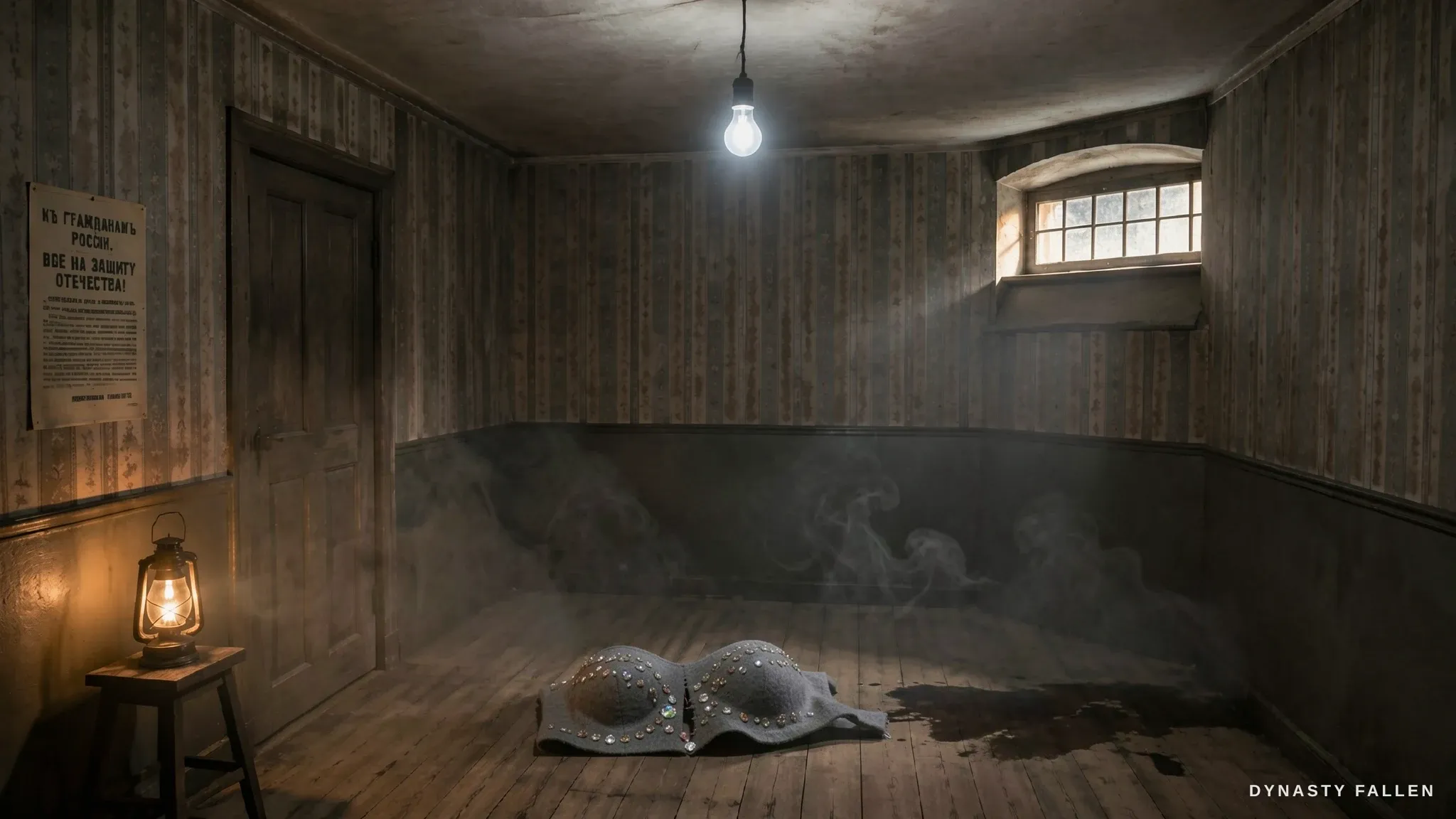
The jewel-lined bodice on the cellar floor — the murder the cartoon tidied away.

What this song renders

The screen history the song attacks is real. The 1956 film won Ingrid Bergman an Academy Award for a story that dignified the survival/impostor legend; the 1997 Fox animation went further, resurrecting the murdered girl as an amnesiac princess chased by Rasputin reimagined as an undead sorcerer, with a romance and a happy ending.

The song’s central charge — ‘you did it after the bones were found’ — is pointed and accurate: the animated musical was made in 1997, after the 1991 exhumation and the DNA identifications had begun closing the survival question. A murdered seventeen-year-old was turned into a singing cartoon for a new audience precisely as the science was burying the myth.

The bridge states the documented reality against the invention: there was no amnesia, no prince, and no spell — there was a cellar. The track names no filmmakers and reproduces no real-person likenesses; it attacks the desecration, not individuals.

Verdict

The films, their content, and their dates are documented; the ‘happy ending’ and the sorcerer are pure invention, and the 1997 animation post-dates the forensic closure. This is the album’s thesis track — the murdered record against the cartoon. See Truth & Legend.

See the full Truth, Saga & Legend entry