vii.

The Woman Who Said She Was Me

Act III — The Lie Released Approx. 4:05
Verse 1
Two lines spoken, then hypnotic and seductive — swelling strings, harmonium, and a soft balalaika under a warm mezzo.

We wanted you alive, we wanted it so badly,
we built a door out of the cellar wall, and called it hope,
A woman came with your eyes, your age, your name,
and the whole world leaned to believe,
we did not want the pit, the acid, the dark,
we wanted the girl who got away,
so we crowned a stranger in your place,
because the lie was kinder than the truth.

Pre-Chorus

It was such a lovely story,
who wouldn't want it true?

Chorus
A gorgeous soaring soprano lift, women's chorus in unison — the lie at full bloom.

Tell me you survived,
tell me you walked out of the snow,
tell me the youngest one got free,
and grew up someone we don't know,
oh, tell me the fairy tale is true.

Verse 2
Same lush palette — the decades of believing.

For fifty years we kept her on the stand,
the cousins came, the courtrooms came, the books,
we paid to keep the door from closing tight,
a world that wants a miracle won't look.

Pre-Chorus

It was such a lovely story,
who wouldn't want it true?

Chorus 2
Bigger, more rapturous — the lie at its most beautiful.

Tell me you survived,
tell me you walked out of the snow,
tell me the youngest one got free,
and grew up someone we don't know,
oh, tell me she didn't really die.

Bridge
The beauty collapses — a cold exposed voice, the strings gone, the truth refusing the dream.

Then the ground gave up its bones,
and the blood refused the dream,
the youngest never walked away,
she died at seventeen — she died.

Final Chorus
The same soaring melody, drained of its beauty into grief.

We wanted you to have survived,
we wanted you out of the snow,
but the youngest never got away,
she grew up no one — she didn't grow,
the fairy tale was never true.

Outro
The strings fall away, an exposed voice, then a hard cut — no fade.

Such a lovely story.
None of it was true.

The history

Europe, the 1920s onward — the survival legend and the decades-long impostor saga, set against the forensic truth that closed it

Source: King & Wilson, The Resurrection of the Romanovs; the Anna Anderson DNA identification (1994); the 1991/2007 graves. See Truth & Legend.

Named figures

  • The believers The world’s collective ‘we’ — cousins, courtrooms, émigrés, and the public who wanted the lost princess to have survived; the song’s voice
  • Anna Anderson The most famous claimant, championed for over fifty years; proven by DNA in 1994 to be Franziska Schanzkowska, a missing Polish factory worker. Imaged, not named in the lyric
  • Anastasia Nikolaevna The absent truth the lie was built around; she arrives only at the bridge turn — the murdered girl in the cold grave, refusing the dream
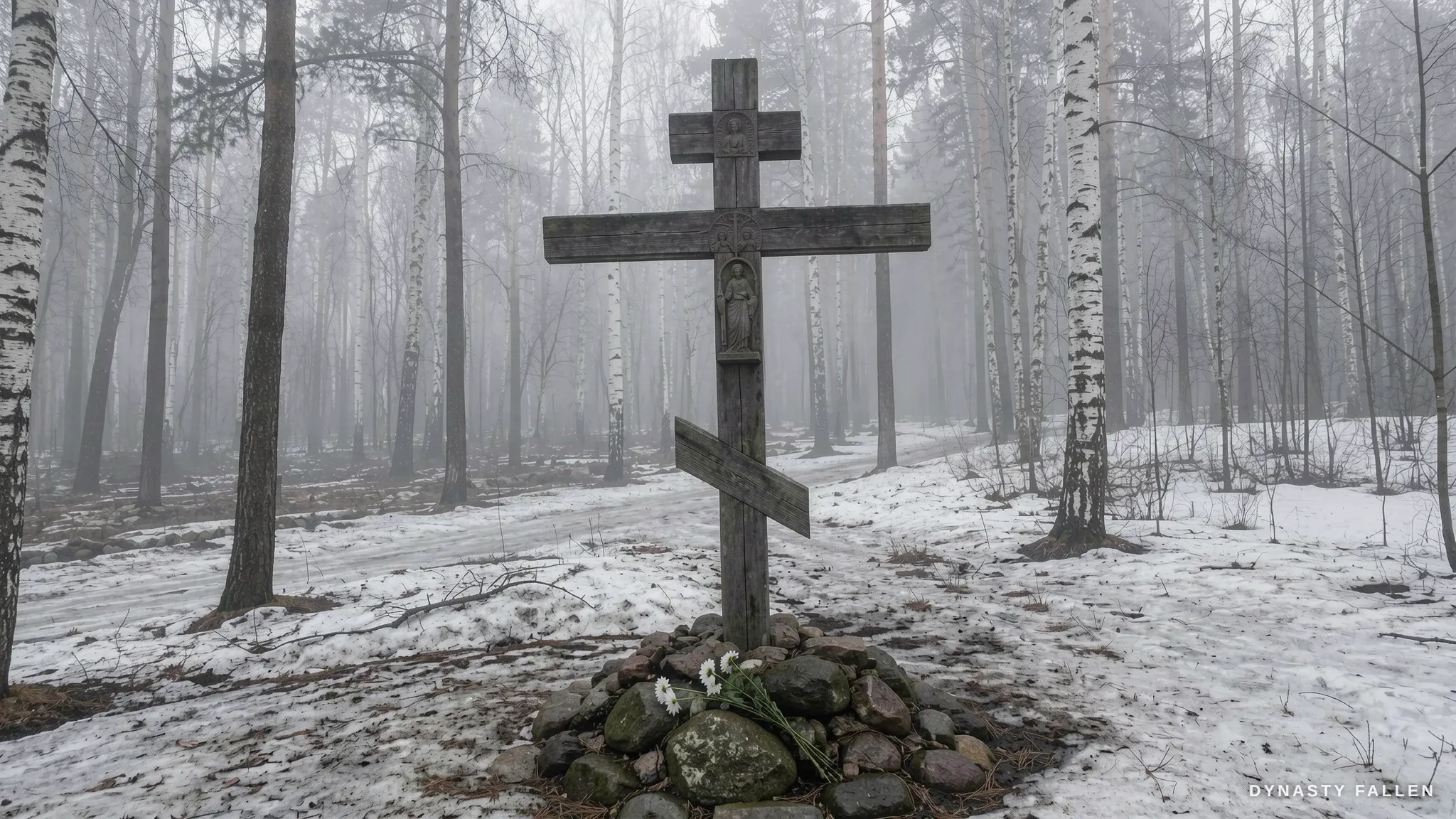
The grave-cross at Ganina Yama — the forensic record that unmasked the impostor.

What this song renders

The phenomenon the song describes is documented. Dozens of impostors claimed to be a surviving Romanov; the famous one, Anna Anderson, sustained her claim through decades of litigation — among the longest cases in German legal history — backed by a wide circle of believing émigrés and relatives. The survival myth persisted because people wanted it true, which is the song’s actual subject.

The truth that refuses it is forensic. The 1991 and 2007 graves and the DNA work of the 1990s established that all the children died; in 1994 DNA proved Anna Anderson was not a Romanov at all but Franziska Schanzkowska, a missing Polish factory worker. ‘The ground gave up its bones’ and ‘the blood refused the dream’ render the graves and the DNA.

The track names no claimant directly — it is about the wanting, not the woman — and shifts the album’s voice for the only time onto the believers rather than the murdered girl. The plea ‘tell me you survived’ is direct-address longing, the engine the song diagnoses.

Verdict

The impostor saga, the decades of belief and litigation, and the DNA unmasking of Anna Anderson as Franziska Schanzkowska are all documented. The survival claim itself is disproven legend. The song’s insight — that the lie survived because it was wanted — is interpretation grounded in that record. See Truth & Legend.

See the full Truth, Saga & Legend entry