What this song renders
The closure is documented and conclusive. The main grave, located in 1979 and officially exhumed in 1991, yielded Nicholas, Alexandra, and three daughters, identified by DNA through the 1990s. The second grave, found in 2007 roughly seventy metres away, yielded the last two children and was DNA-confirmed in 2008 — demonstrating that all four daughters died in 1918 and none survived. ‘Read the blood’ is the DNA; ‘four daughters dead’ is the result.
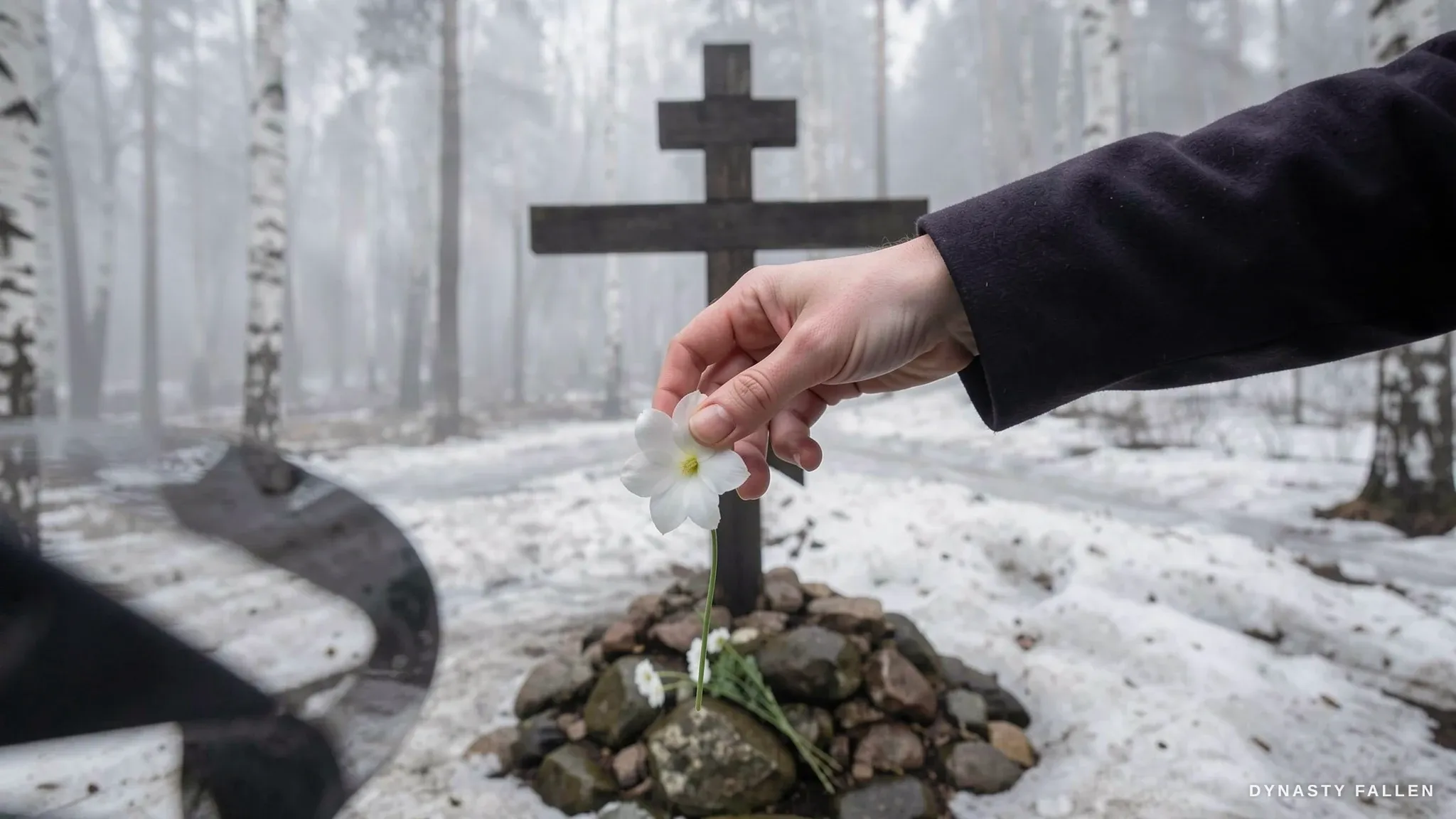
The reclaiming the second verse describes is also real: the family was reburied (Saints Peter and Paul Cathedral, 1998) and later canonised by the Russian Orthodox Church — ‘a church at last, a name on a stone, a candle lit.’ With the science settled, the impostors fell and the cartoon was hollow; a murdered girl was finally allowed to rest.
The bridge reclaims the name. Anastasia derives from the Greek for ‘resurrection,’ and the album’s engine is that the one daughter whose name means ‘she who rises’ was the one the world refused to let stay dead. The closing whisper — ‘I was a girl. I was murdered. I was no one’s lie’ — is a dramatised first-person line, not a quotation, the album’s answer to ninety years of fairy tale.
The 1991 and 2007 exhumations, the DNA identifications confirming all four daughters dead, and the reburial and canonisation are documented and forensically conclusive. This is the record the album takes over the cartoon: the lie rose; the girl did not, and is finally allowed to stay dead. See Truth & Legend.