Dynasty Fallen · Vol. XVIII

Emma
of Normandy

Twice a queen. Mother of two kings by two kings. The woman who wrote her own history.
Leave the first one out.

The story

1002 – 1052
Winchester, London, Normandy and Flanders
England between the Unready and the Conquest

Emma of Normandy was the daughter of one Norman duke and the sister of another, sent across the Channel in 1002 at about seventeen to marry Æthelred of England — a king twice her age, with a hall full of grown sons by a first wife. On arrival she was given an English name, Ælfgifu. It was the first wife’s name. That November her new husband ordered the killing of the Danes in England, and at Oxford they burned the church they had fled into.

Fourteen years later he was dead, England belonged to the Dane Cnut, and Æthelred’s widow married the conqueror. She was queen again for eighteen years, held the Winchester treasury for her son when Cnut died, lost a son to a letter nobody has ever found, was driven into exile, came home behind sixty-two ships — and then did the thing no other woman on this catalogue did. She hired a monk to write it all down. The Encomium Emmae Reginae is her side of the story, and it never once mentions the husband she had for fourteen years.

Vol. XVIII runs in three acts and one room. What They Made Me is 1002 to 1017: the name, the massacre, the flight to Normandy ahead of the king, the second wedding. What I Held is 1035 to 1040: the treasury, the absent son, Alfred, the fleet. What Survived is 1041 to 1052: the book, the son who came for the silver, and the grave she chose.

“Leave the first one out.”

The contested record is the content here, but turned inside out. Most of the women in this catalogue survive in documents written against them. Emma survives in a document written to her order — and the only source for some of her best moments is the book she paid for. This album sings her version the way she told it, and the Truth & Legend page is where you can check it.

Album in active production. 8 of 11 tracks released. The remaining 3 drop through the rest of the cycle.

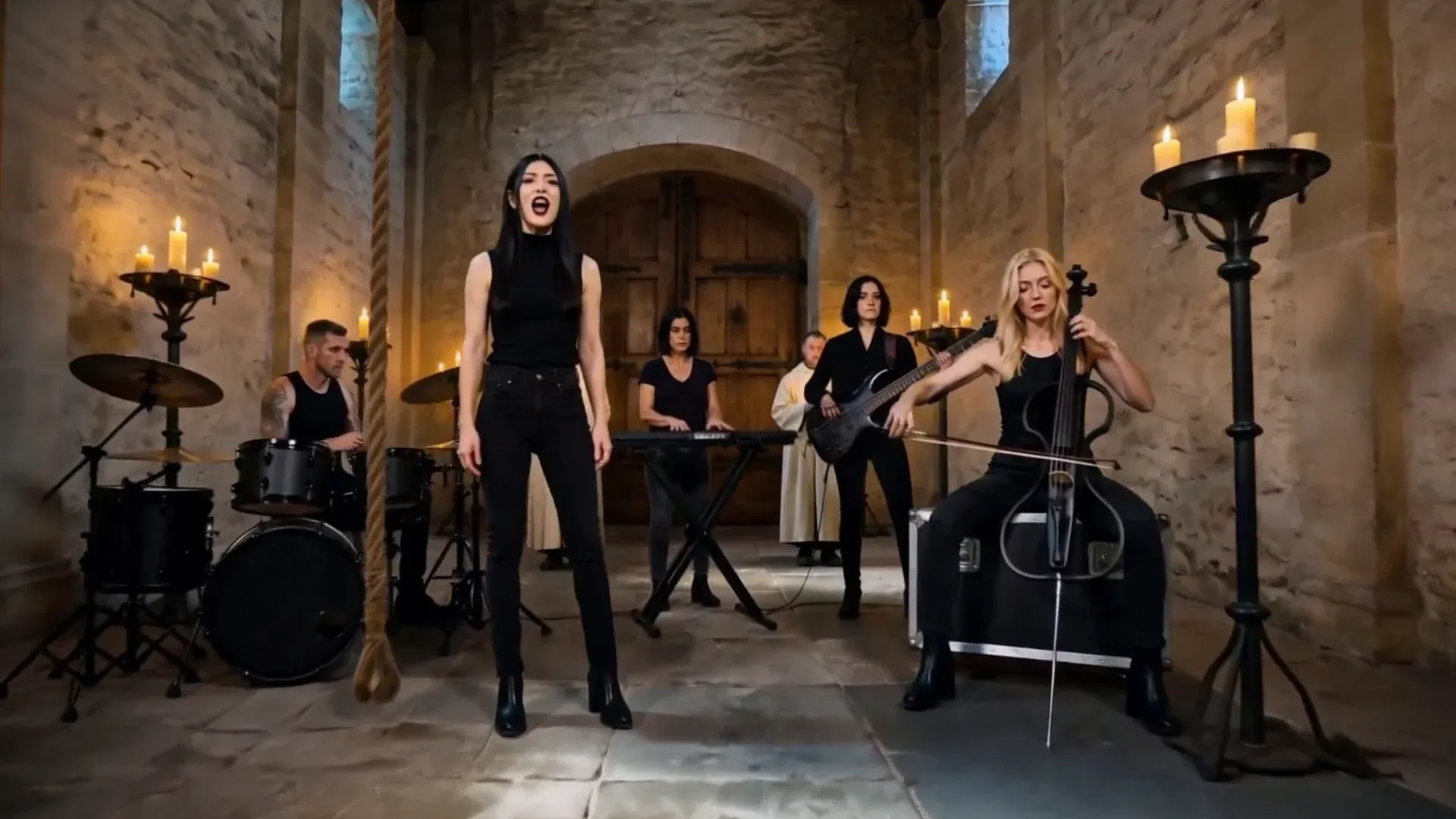
Music videos

Out now.

The album opens on a Norman girl of seventeen at a Winchester altar, answering to a dead woman’s name the first time it is called. It closes fifty years later on a stone lifted in the Old Minster floor — beside the second husband, not the first.

Track list

Eleven tracks. Three acts.

Three acts, one room: how she came to stand in the Winchester treasury; how she held it through a dead king, an absent son and a letter nobody has ever found; and what she chose to outlast it — a book with her first husband left out, and a grave beside the man who conquered him.

Questions

About Emma.

The short answers — with links into the lyrics and the annotated history where the record gets interesting.

Who was Emma of Normandy?
Emma (c. 985 – 6 March 1052) was the daughter of Duke Richard I of Normandy and sister of Duke Richard II. She was married to Æthelred II “the Unready” in 1002, and after his death and the Danish conquest married the conqueror, Cnut, in 1017. She was queen of England under both dynasties, mother of two kings — Harthacnut and Edward the Confessor — and the only early medieval English queen to commission a book about herself. Dynasty Fallen Vol. XVIII tells her fifty years in England.
Why was Emma of Normandy called Ælfgifu?
On her marriage in 1002 she was given the English name Ælfgifu, and that is what the Anglo-Saxon Chronicle and her charter witnessings call her — Ælfgifu regina. “Emma” is the Norman name her own book, the Encomium, uses. The name was not new to the household: Æthelred’s first wife, the mother of his elder sons, is also named Ælfgifu in twelfth-century sources, and Cnut’s other partner was Ælfgifu of Northampton. Three Ælfgifus, one of them Emma.
Did Emma of Normandy marry the man who conquered her husband's kingdom?
Yes. Æthelred died in London in April 1016 with Cnut’s army in England; after his son Edmund Ironside died that November, Cnut became king of all England. The Anglo-Saxon Chronicle records that before 1 August 1017 Cnut had the late king’s widow fetched to be his wife. Her own book later claimed she made him swear that no son of any other wife would succeed him — a promise known only from that book.
What is the Encomium Emmae Reginae?
In Praise of Queen Emma — a Latin political biography Emma commissioned in 1041–42 from a monk of Saint-Bertin at Saint-Omer in Flanders. It tells the Danish conquest, her marriage to Cnut, and the struggle over the succession after his death, entirely in her interest. It never mentions Æthelred, her husband of fourteen years. The album is built on that omission: leave the first one out.
Did Emma betray her son Alfred?
Nobody knows, and the album refuses to decide. In 1036 her son Alfred crossed from Normandy, was taken at Guildford, blinded, and died at Ely. The Encomium says he came because of a letter in her name that was a forgery by Harold Harefoot. Some modern historians think she may have written it herself. No letter survives. See the Truth & Legend page.
Why did Edward the Confessor take his mother's treasure?
In November 1043 Edward rode from Gloucester to Winchester with the earls Leofric, Godwin and Siward and took her lands and treasure. The Chronicle says it was because she had done less for him than he wanted, before he was king and after. A later story says she had offered her wealth to Magnus of Norway. Some of what was taken was later restored, and she lived on quietly at Winchester.
Where is Emma of Normandy buried?
In Winchester. The Chronicle records her death on 6 March 1052 and burial in the Old Minster with King Cnut — while Æthelred lies in St Paul’s, London. The royal bones of Winchester were later gathered into mortuary chests and scattered by Parliamentarian soldiers in 1642; a 2019 study of the chests identified the bones of a mature late Anglo-Saxon woman who may be Emma.
Did Emma really walk over red-hot ploughshares?
No. The story of Emma accused of adultery with Bishop Ælfwine and proving her innocence by walking barefoot over nine red-hot ploughshares in Winchester is a legend first written down about two centuries after her death, in the Winchester annals. No contemporary source knows it.

Where to listen

New tracks drop through the cycle.

Stream the album on your service of choice. Music videos go up on YouTube.